

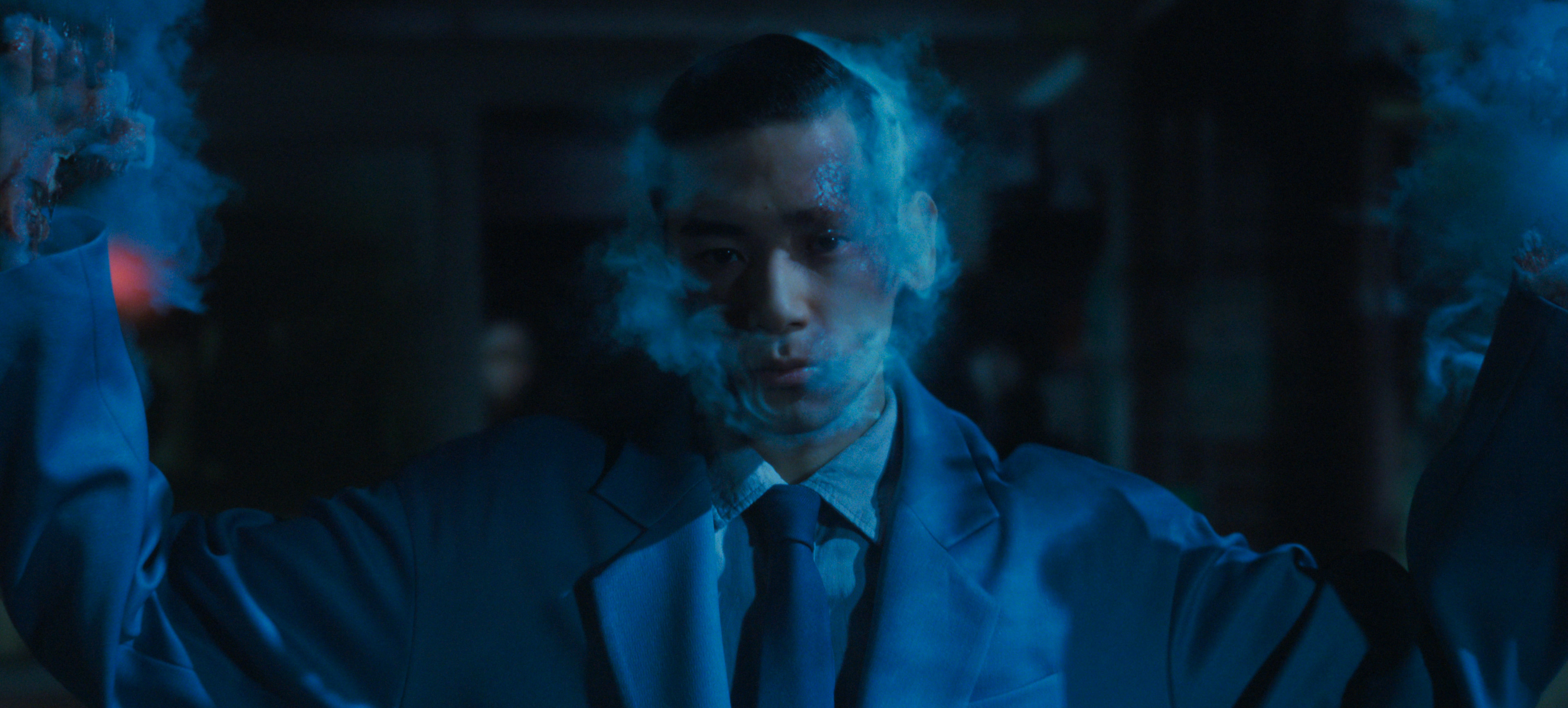
 Netflix's HUMAN VAPOR series, a reimagining of the 1960 Toho sci-fi classic, will be released July 2nd. Photo courtesy of Netflix Japan. ©TOHO CO., LTD.
Source: Netflix
Official Site: https://www.netflix.com/humanvapor (US)
Special Thanka to Yoshitaka Onuma
Netflix Japan has provided SciFi Japan with the official press notes and photo gallery for their new HUMAN VAPOR (ガス人間, Gasu Ningen) live-action series based on the classic Toho film, THE HUMAN VAPOR (ガス人間第一号, Gasu Ningen Daiichigō,1960).
HUMAN VAPOR starts streaming worldwide this Thursday, July 2, only on Netflix.
Introduction
Approximately 60 years ago, THE HUMAN VAPOR (1960) united the defining creative voices of its era — a film that fused science fiction with incisive social commentary. Now, that vision is reborn in a landmark collaboration between Toho and Netflix. Reimagined as a drama series with an all-new, completely original 8-episode story, it brings together the most compelling talent across Asia to create something the world has never seen.
Directing all eight episodes is Shinzo Katayama, who made a mark with his debut feature SIBLINGS OF THE CAPE (岬の兄妹, Misaki no Kyōdai, 2019). His subsequent work, from MISSING (さがす, Sagasu, 2022) to GANNIBAL (ガンニバル, Gan'nibaru, 2022–25, Disney+), has only sharpened that anticipation. He is joined by Yeon Sang-ho, the director who stunned global audiences with TRAIN TO BUSAN (부산행; Busanhaeng, 2016), here taking on the role of screenwriter. Together, they build a world entirely their own.
When the Human Vapor appears in modern-day Japan — staging a series of theatrical, pre-announced murders — the detectives and reporters who stand against him are played by Shun Oguri and Yu Aoi, two pillars of Japanese cinema whose presence carries a rich, bittersweet weight. Suzu Hirose and Kento Hayashi play a pair of live-streamer siblings, bringing a trickster energy that pushes both into thrillingly new territory. And making their acting debut, UTA arrives with a screen presence so commanding and so unpredictable, it defies anticipation entirely.
A grotesque figure. A society's hidden darkness. VFX from an Academy Award-winning team. This is a new-dimension crime thriller — and it is only the beginning.
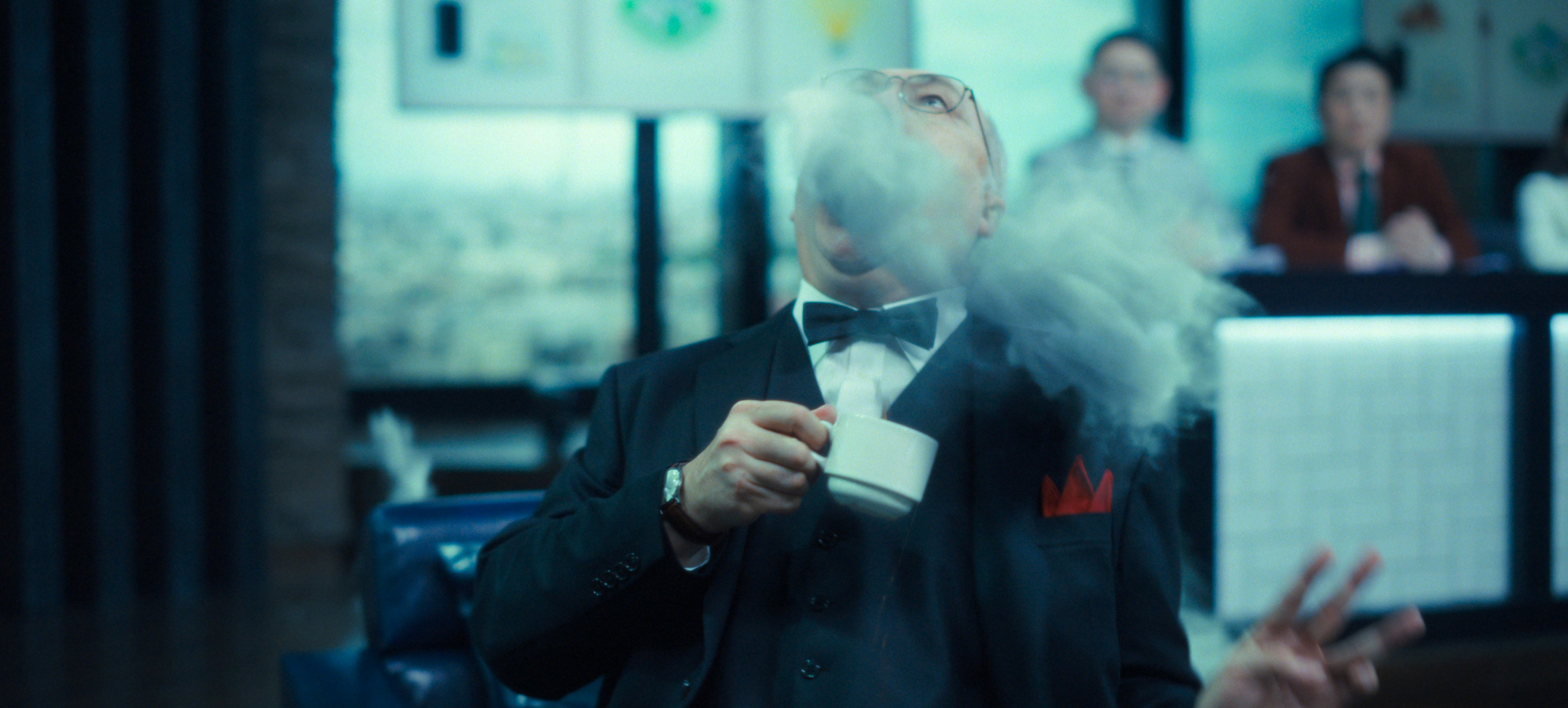 A university professor is bizarrely murdered during a live television broadcast in Episode 1 of HUMAN VAPOR. Photo courtesy of Netflix Japan. ©TOHO CO., LTD.
Story
Detective Kenji (Shun Oguri) is suspended from duty when he's pulled into the investigation of an unprecedented murder: a university professor, mid-broadcast, suddenly levitates, explodes and dies. At the scene, he reunites with Kyoko (Yu Aoi), a news reporter and former lover who witnessed it firsthand. Before either can make sense of what they've seen, a man calling himself the Human Vapor (UTA) announces a string of murders to come — and sends the public into a panic.
Kenji and Kyoko race to stop him. But their targets keep turning up dead first. Who is the Human Vapor? How did he acquire his extraordinary ability? And what does he want? What begins as a murder investigation spirals into a collision of competing agendas — police, media, YouTubers, the criminal underworld, and those in power all pulling in different directions. When the gas finally clears, the truth that emerges is devastating enough to shake the nation to its core.
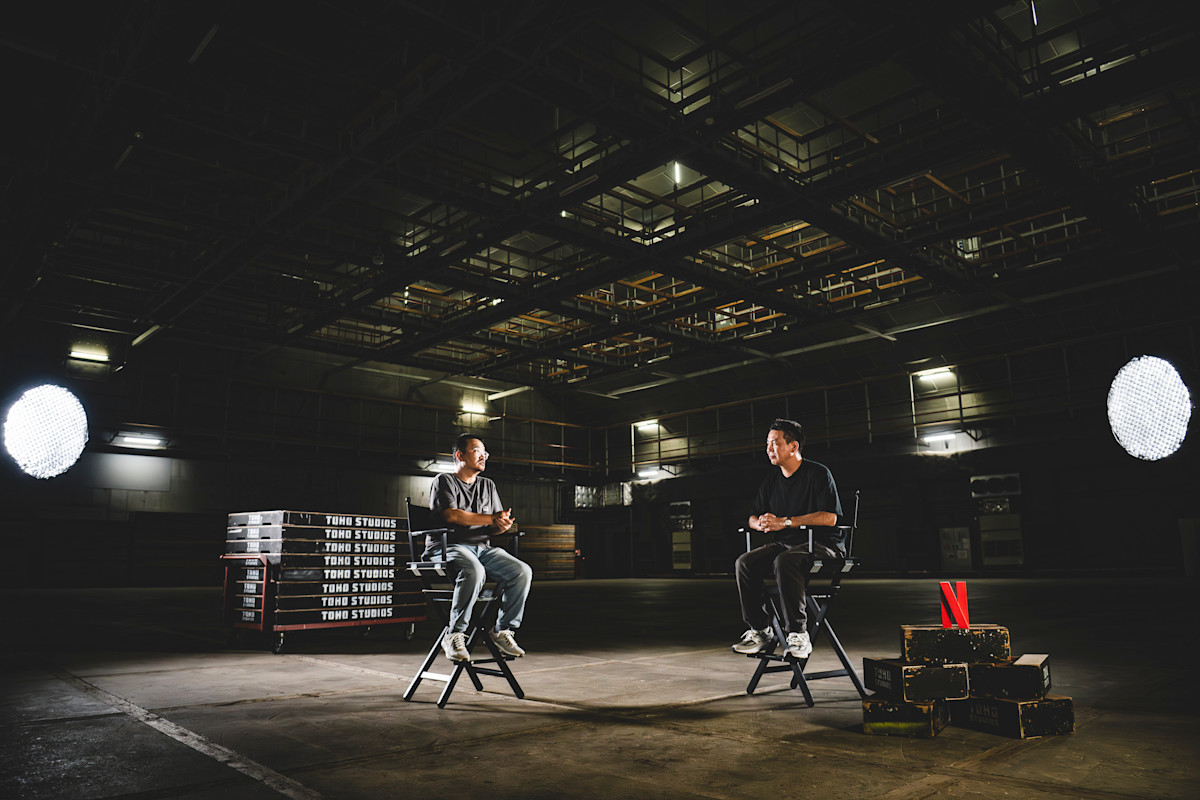 Yeon Sang-ho and Shinzo Katayama at Toho Studio No. 9 in Tokyo. Photo courtesy of Netflix.
Director Shinzo Katayama × Yeon Sang-ho: In Conversation
— We understand that Yeon Sang-ho met with Toho’s Producer Hyo Nian in 2018, and chose Human Vapor from among the projects presented. What drew you to it?
Yeon: I've always been drawn to subculture films — Toho's tokusatsu* (special effects) movies in particular. So when Toho approached me about reimagining THE HUMAN VAPOR, it felt like a natural fit. The original is a 1960 film, but watching it today, it holds up remarkably well — sophisticated in its sci-fi expression in ways that still feel fresh. The idea of bringing it back as a contemporary visual work was simply too exciting to pass up.
*The collective term for Toho's genre films from the 1950s–60s, including THE INVISIBLE AVENGER (透明人間, Tōmei Ningen,1954), THE H-MAN (美女と液体人間, Bijo to Ekitai-Ningen, 1958), THE SECRET OF THE TELEGIAN (電送人間, Densō Ningen, 1960), and THE HUMAN VAPOR (1960).
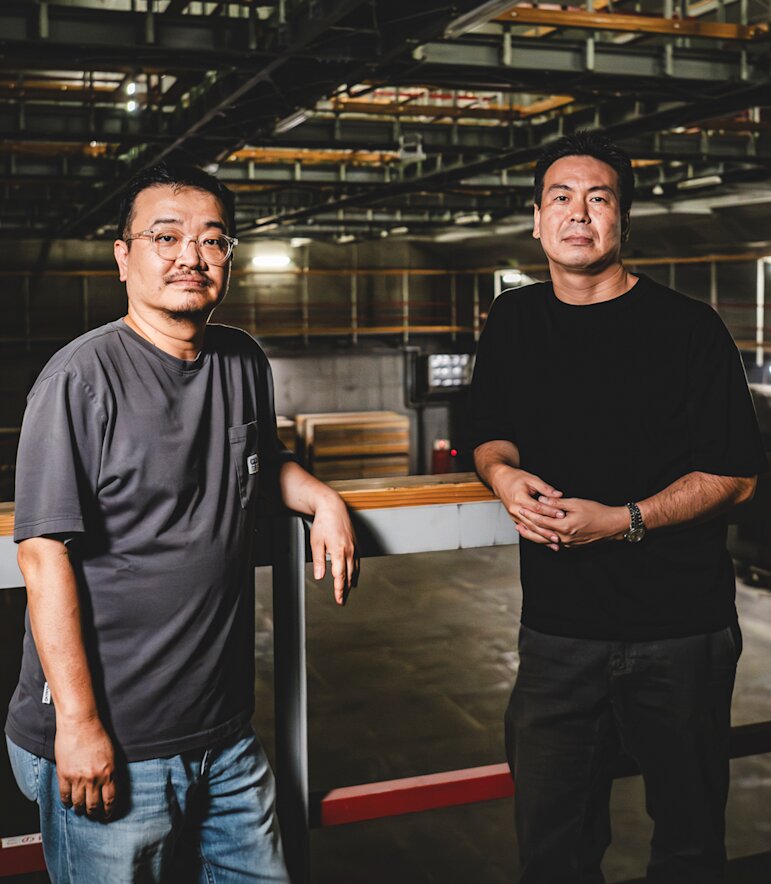 Yeon Sang-ho and Shinzo Katayama. Photo courtesy of Netflix.
Katayama: I was approached with the proposal: "Yeon Sang-ho will write the screenplay, and we'd like you to direct it in Japan." It was such an enormous proposition that at first I thought, "This must be some kind of mistake." Then I received a Facebook friend request and a direct message from Director Yeon, and I thought, "Maybe this is actually real" — and got very excited.
At the time, I knew of THE HUMAN VAPOR but hadn't seen it. When I watched it, I found it fascinating. Despite the outlandish creature at its center, it was packed with human drama and romance, and I was drawn to it. I felt that reviving an old tokusatsu property with modern CG while incorporating human drama could make for a truly wonderful work.
Yeon: Toho mentioned Director Katayama's name to me, and I first watched THE WANDERING BLADE (2021). That story has also been adapted in Korea, but I felt Director Katayama's version was compelling and accomplished. Seeing how he drew out characters' emotions and the ingenuity of his camerawork, I was captivated by his directorial skill. Setting aside whether he'd actually agree to direct HUMAN VAPOR, I personally wanted to get to know him, so I sent him a message on Facebook. After that, I watched SIBLINGS OF THE CAPE (2018) and MISSING (2022), and I was convinced he was a truly exceptional director. I wrote the screenplay, but I'm very much looking forward to seeing a new work emerge from Director Katayama's hands.
— The screenplay took about three years to develop, including a script retreat in Korea.
Katayama: When we were working through scenes, Yeon would act them out on the spot — playing about three roles at once. He was so good that I genuinely wanted to cast him.
Yeon: I'd show Director Katayama, "How about this kind of performance?" and he'd give me an immediate yes or no. I got the impression he was a very strict judge who didn't give his approval easily.
Katayama: Not at all — you were wonderful, and I kept thinking, "Yeon can act too!" Yeon and screenwriter Ryu Yong-jae spent about a year and a half to two years writing the foundational screenplay. I read it, had several meetings, and then we held the script retreat in Korea. Since there are cultural differences between Japan and Korea, we felt it would be easier to sit face-to-face and work through the finer details.
Yeon: The first major challenge in writing the screenplay was that we — as Koreans — were writing a story set in Japan. To create a new Human Vapor, I tried to draw inspiration by watching a large number of Japanese works. When Korean creators work in Japan or Japanese creators work in Korea, there can be a sense of awkwardness because the emotional sensibilities differ. In this project, I had many conversations with Director Katayama and Toho's producers about even the smallest details of the script — how would this feel in Japan? — and I made every effort to absorb that feedback. Even though it's a screenplay written by a foreigner, it needs to feel like something that could actually happen in Japanese society. Director Katayama and the Toho producers were an enormous help in that regard.
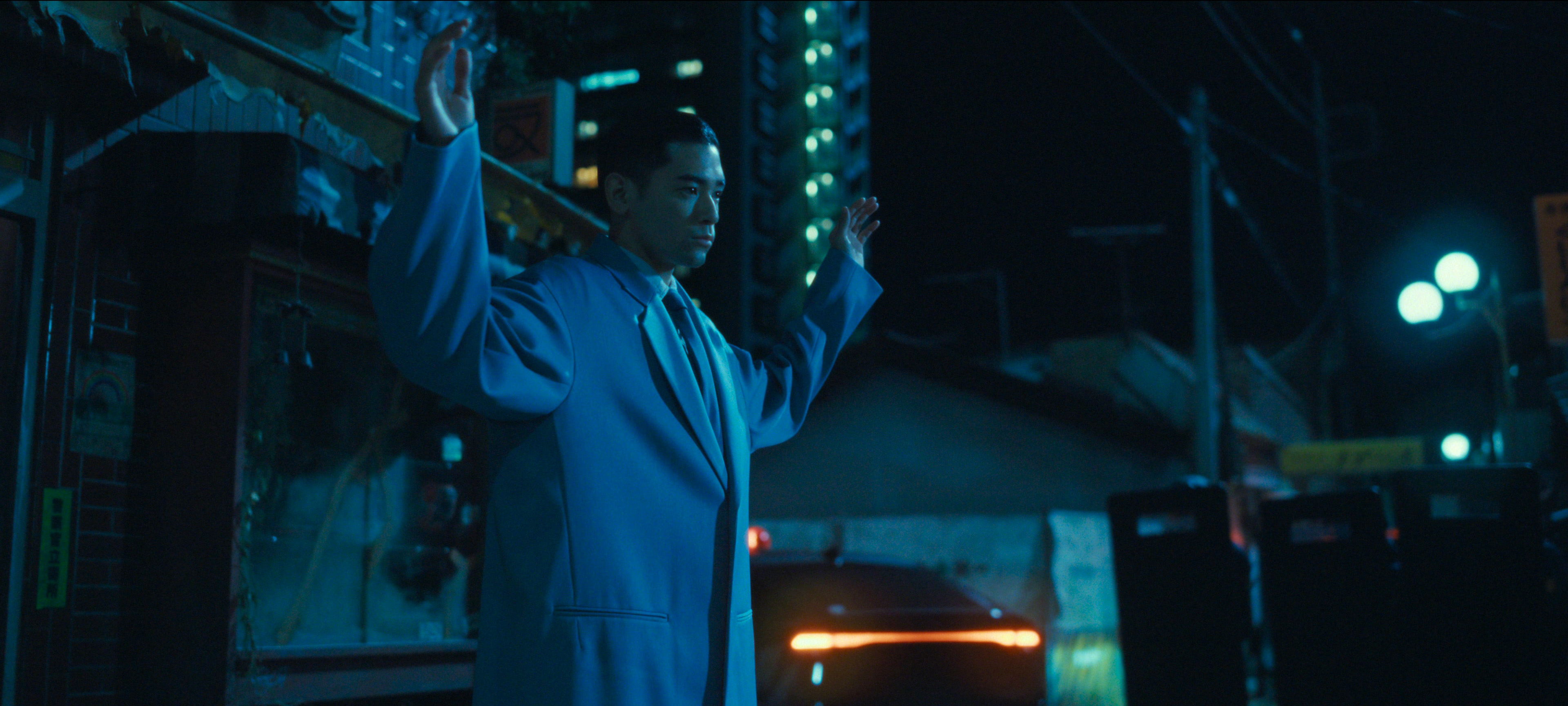 The mysterious killer surrenders to authorities... or does he? Photo courtesy of Netflix Japan. ©TOHO CO., LTD.
Katayama: During the retreat, Director Yeon put forward an incredible number of ideas. I was in awe. He'd reference various films as he talked, and I kept wondering: where do all those ideas come from?
Yeon: It might have to do with how I watch films. When most people watch something, the parts that stay with them tend to be the highlight scenes. But I'm the type who is drawn to the moments that pass by quietly — and those are the ones I remember. When I'm writing a screenplay or shooting, those moments float back up, along with the emotions I felt watching them.
— What did you place at the core of this new HUMAN VAPOR?
Yeon: I spent a long time thinking about what the essence of the original THE HUMAN VAPOR really is. It's a sci-fi thriller, but as Director Katayama said, its true nature is a human story — a story about people. I felt it was essential to handle human emotion with care throughout, and to show the human side of the characters effectively.
Katayama: That's something I intend to hold onto as I approach the shoot. I also want to honestly depict the social dynamics of contemporary Japan — the relationship between the powerful and the powerless.
 After 23 years, actors Shun Oguri and Yu Aoi reunite onscreen in HUMAN VAPOR. Photo courtesy of Netflix.
— Could you tell us about the casting of Shun Oguri and Yu Aoi?
Yeon: The first actor I thought of while writing the screenplay was Yu Aoi, and I suggested her to Director Katayama as well. She's very well known in Korea for HANA & ALICE (花とアリス, Hana to Arisu, 2004), and her work through to WIFE OF A SPY (スパイの妻, Supai no Tsuma, 2020) has been truly extraordinary. I can't wait to see her bring the character I wrote to life.
As for Shun Oguri — he needs no introduction as one of Japan's top stars, and he's very well known in Korea too. The moment he agreed to join HUMAN VAPOR, I felt a light of success had been lit. When I met him in person, his passion was palpable, and I'm very much looking forward to it.
Katayama: I'm told this is their first live-action co-starring role in 23 years, and I'm very excited to see what kind of chemistry they'll create. I'm looking forward to capturing the beauty of their expressions and physicality within the frame.
— We understand that from the very beginning of this project, Yeon Sang-ho consistently said he wanted to "win globally with an Asia-originated project."
Yeon: When I was a university student, I thought that the kind of genre films I'm making now could only be made if you went to America. Now Korea has the environment to make them too, and I feel the same is true of Japan — things have improved enormously compared to the past. In particular, the emergence of Netflix as a global platform has created fertile ground for Asian works to spread universally around the world. As someone creating things in this era, I want to embrace "making something the whole world can enjoy" as our mission.
Katayama: It's wonderful that we're in an age where work can reach the world more easily. That said, for me personally, if I become too conscious of "the world" and tense up, I feel I'll lose sight of the purpose. I intend to approach it believing that if I sincerely pursue what I and everyone involved finds genuinely interesting, we'll naturally get there. I think the works that are being recognized globally right now are the result of simply trying to make something good — not of strategic calculation. By the way, Yeon, you've achieved global hits with every project — how much of that is calculated?
Yeon: First, captivating people visually. And then, while incorporating the cultural interiority of the country or region where the work was made, deeply and thoroughly depicting human beings themselves. In Human Vapor, visuals are of course important — but what I'm even more excited about is the human story. If that part is expressed well, I believe it will resonate with audiences around the world.
— Thank you so much for sharing all of this. You're currently in the thick of pre-production — could you leave us with a message of intent for everyone looking forward to the series?
Yeon: My excitement about wanting to see this work as soon as possible is growing by the day. It will probably be more than a year before it's out in the world, but I want as many people as possible to look forward to it — enough to easily surpass the expectations I have right now.
Katayama: We've spent a truly long time preparing for this. There are locations we were specially permitted to film in places that would normally be off-limits. I believe we'll be able to deliver visuals that have never been seen in a Japanese production before, and that in itself is a huge source of motivation for me. Please look forward to it.
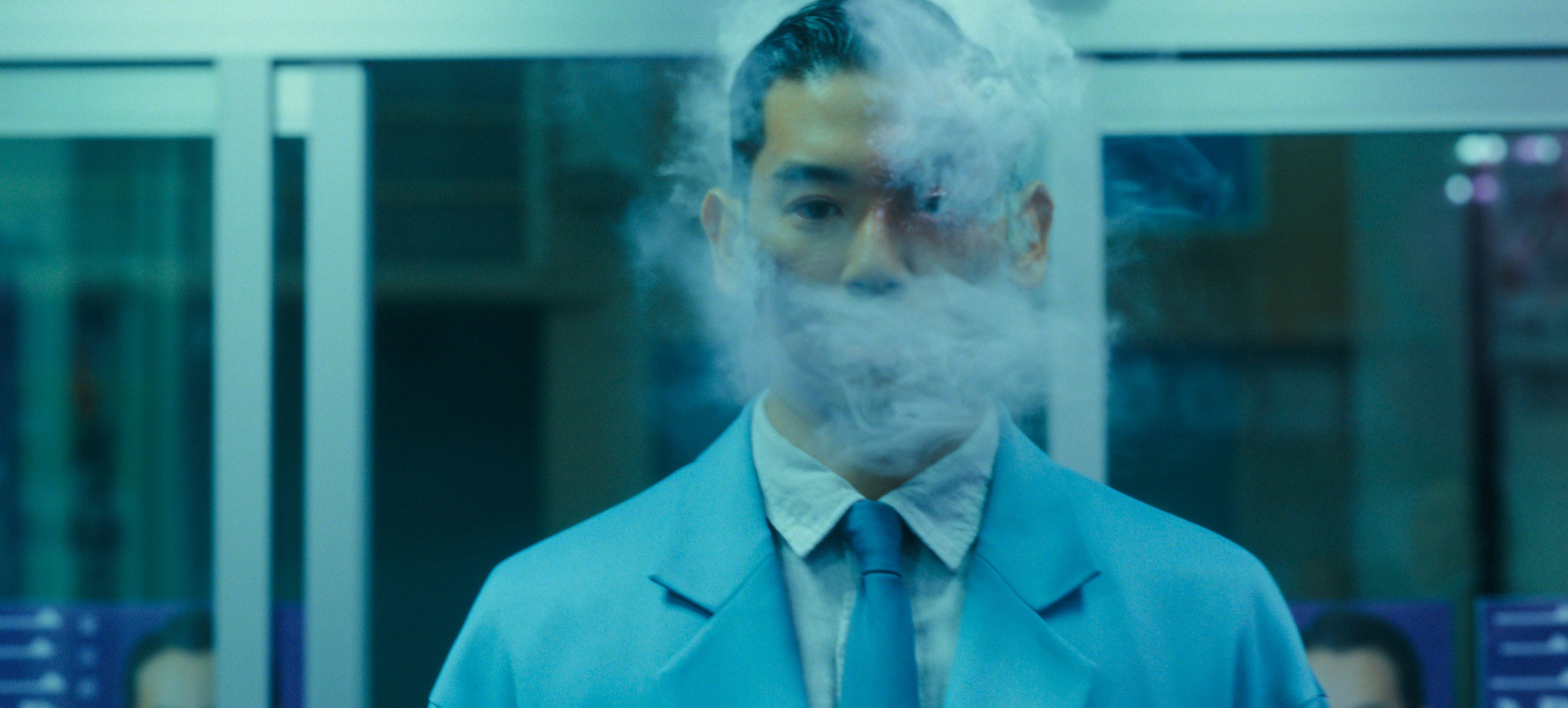 Photo courtesy of Netflix Japan. ©TOHO CO., LTD.
The Toho × Netflix × Yeon Sang-ho Collaboration — Eight Years in the Making
How did the reboot of THE HUMAN VAPOR (1960) — part of Toho's tokusatsu film series from the 1950s–60s — come to be?
Toho Producer Hyo Nian, who has launched joint ventures with companies ranging from TikTok to Shueisha, reflects: "Toho has nearly 90 years of history, but I felt we weren't really making the most of our own IP beyond Godzilla, and that seemed like a waste."
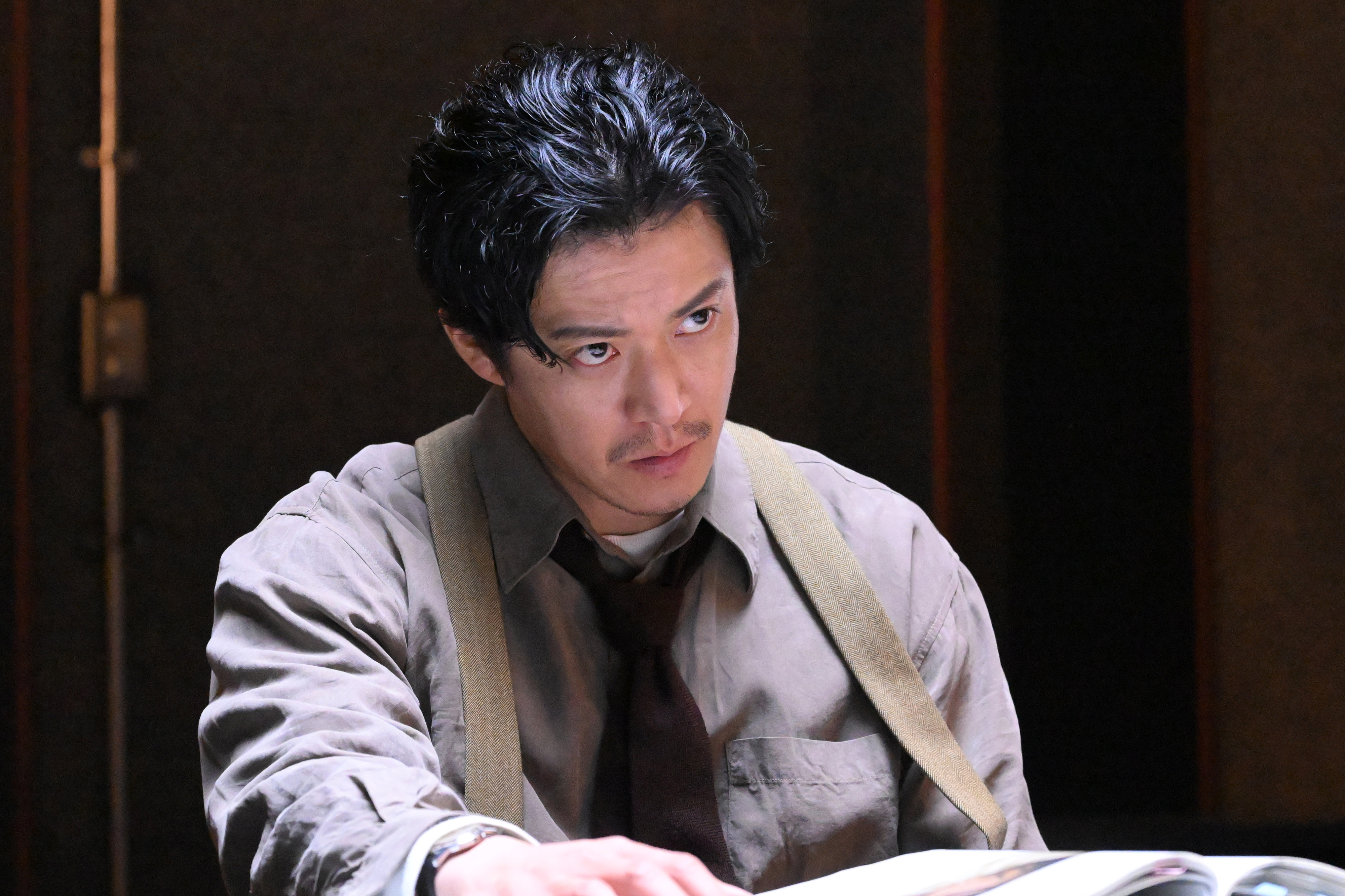 Shun Oguri as Detective Kenji Okamoto. Photo courtesy of Netflix Japan. ©TOHO CO., LTD.
Around that time, a horror film was causing a sensation worldwide, beginning with its premiere at the Cannes International Film Festival. That film was TRAIN TO BUSAN (2016), which opened in Japanese theaters in September 2017 and became an overnight phenomenon. Determined to work with its director, Yeon Sang-ho, Producer Hyo — along with the then-head of the planning department — reached out to Director Yeon and visited Korea in 2018. Among the projects they brought with them, the one that caught Director Yeon's interest was HUMAN VAPOR.
"Director Yeon comes from an animation background and has a deep knowledge of Japanese manga and anime — but the fact that he even knew about THE HUMAN VAPOR was a surprise. He immediately gave us a two-page A4 memo of ideas for how to reboot THE HUMAN VAPOR for a modern audience, and it was so exciting. I knew we had to make this happen."
By that point, the core concept was already in place: "a serial killer known as the Human Vapor terrorizes society through theatrical crimes, pursued from the perspectives of a detective and a reporter," along with the foundation for an opening scene in which a character is suddenly killed by the Human Vapor (at that stage, the ability involved rapidly draining surrounding heat to freeze victims to death). However, given the concept of "converting tokusatsu techniques into VFX for a contemporary drama — a grounded human drama and crime suspense rather than fantasy" — it was clear this would be a high-budget, large-scale production. Just as Producer Hyo and the team were wrestling with how to bring it to fruition, COVID-19 brought development to a halt. In the midst of that uncertainty, a helping hand arrived from Netflix — marking Toho's first-ever collaboration with the streamer.
"During the pandemic, works like CRASH LANDING ON YOU (사랑의 불시착, Sarangui bulsichak, 2019) and ITAEWON CLASS (이태원 클라쓰, Itaewon keullasseu, 2020) became hits in Japan through Netflix, and Director Yeon had also released HELLBOUND (지옥, Jiok, 2021) and was finding a path forward through streaming. He later made PARASYTE: THE GREY (기생수: 더 그레이, Gisaengsu: deo geurei, 2024) as well, and the strong relationship he had built with Netflix was a major boost," Producer Hyo says.
With Netflix as a powerful partner, HUMAN VAPOR— which would become Toho's first streaming series — began to take concrete shape around 2020. The team's guiding concept was to create something from Asia that entertains not just Japan, but the world. "From the very first time we met, Director Yeon kept saying, 'The day will definitely come when Asian works are watched all over the world.' At the time, I was half-skeptical — but it actually happened," Producer Hyo reflects.
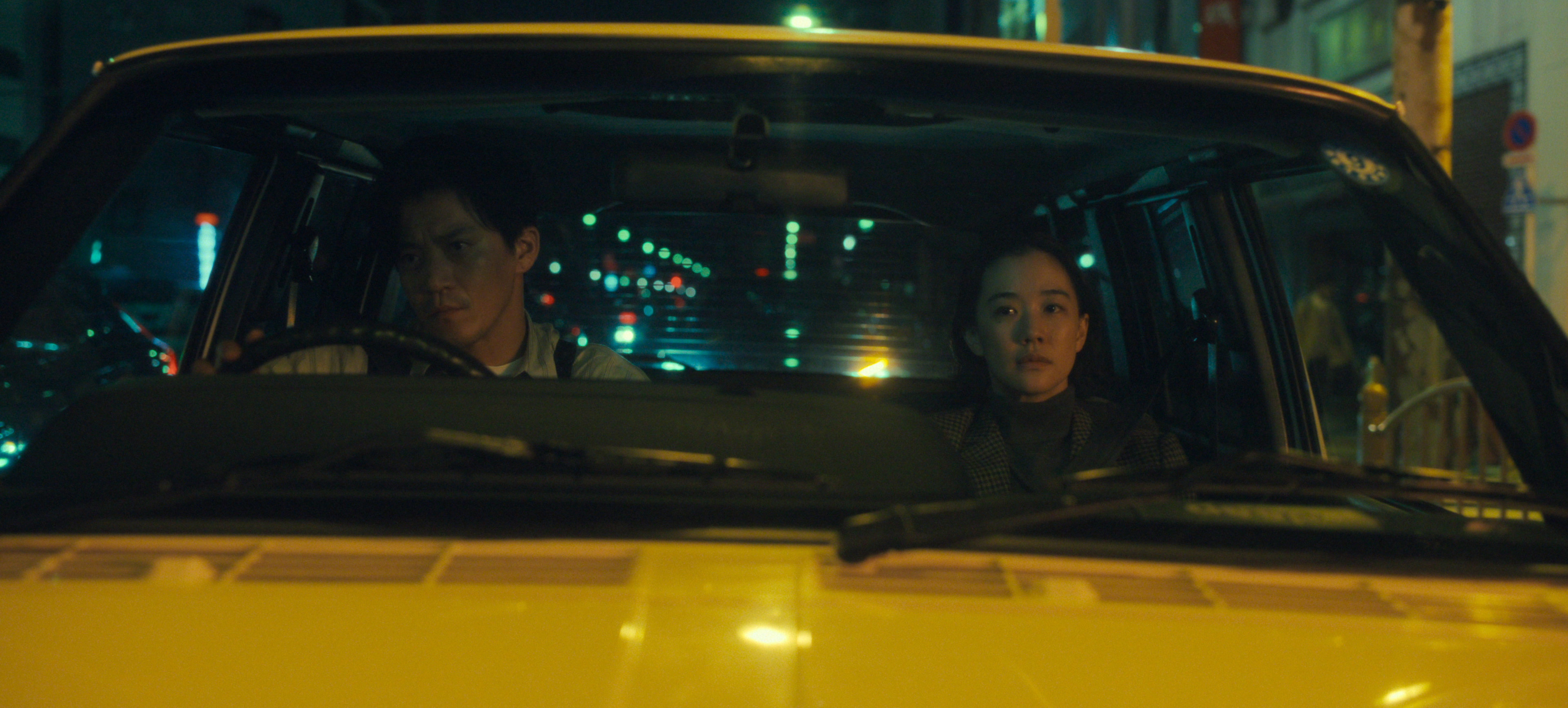 Photo courtesy of Netflix Japan. ©TOHO CO., LTD.
Director Shinzo Katayama's Commitment: "I Direct Every Episode"
Who to entrust with this project full of firsts? The producing team set their sights on Shinzo Katayama, who had made a stunning debut with SIBLINGS OF THE CAPE in 2018. Having served as assistant director on Bong Joon-ho's TOKYO! (2008) and MOTHER (마더, Madŏ, 2009), among many other works, Katayama had experience collaborating with Korean creators.
With THE WANDERING BLADE (さまよう刃, Samayōyaiba, 2021), he also tackled a Keigo Higashino adaptation, continuing to release new work that transcends the boundary between art and entertainment while maintaining a strong authorial voice. At the time, Katayama had the release of MISSING (2022) on the horizon and was juggling multiple projects, including Disney+'s GANNIBAL (2022–25) and the film LUST IN THE RAIN (雨の中の慾情, Ame no Naka no Yokujō, 2024) — yet he readily accepted the invitation to this dream project. While it is standard practice for drama series to have multiple episode directors, the fact that Katayama made "directing all 8 episodes" a condition of his participation speaks to his passion. He actively participated in script meetings, exchanging ideas with Director Yeon — who serves as screenwriter and executive producer — to refine the work.
Producer Soki Onoda, who watched the two of them work side by side, describes it this way: "Director Yeon is a genius at constructing innovative stories and setting up characters, while Director Katayama has an extraordinary skill for bringing flesh-and-blood human beings to life on screen. The way he drew out the personalities and backstories of Kenji and Kyoko was exquisite. One of Director Katayama's hallmarks is his distinctive sense of humor, and I feel that's only possible because he digs so deeply into each character. Director Yeon normally handles both directing and writing on his own, but he trusted Director Katayama enormously, flexibly incorporating his ideas, and the revisions moved in a very positive direction."
It wasn't only Directors Yeon and Katayama who actively contributed ideas. HUMAN VAPOR reaches a shocking turning point in Episode 4 that upends the very foundation of the story — and it was the producers who suggested placing it at the midpoint. “Originally, it was structured to be introduced in Episode 7 out of 8, but we asked them to move it to the midpoint so viewers wouldn't lose interest,” Producer Hyo notes.
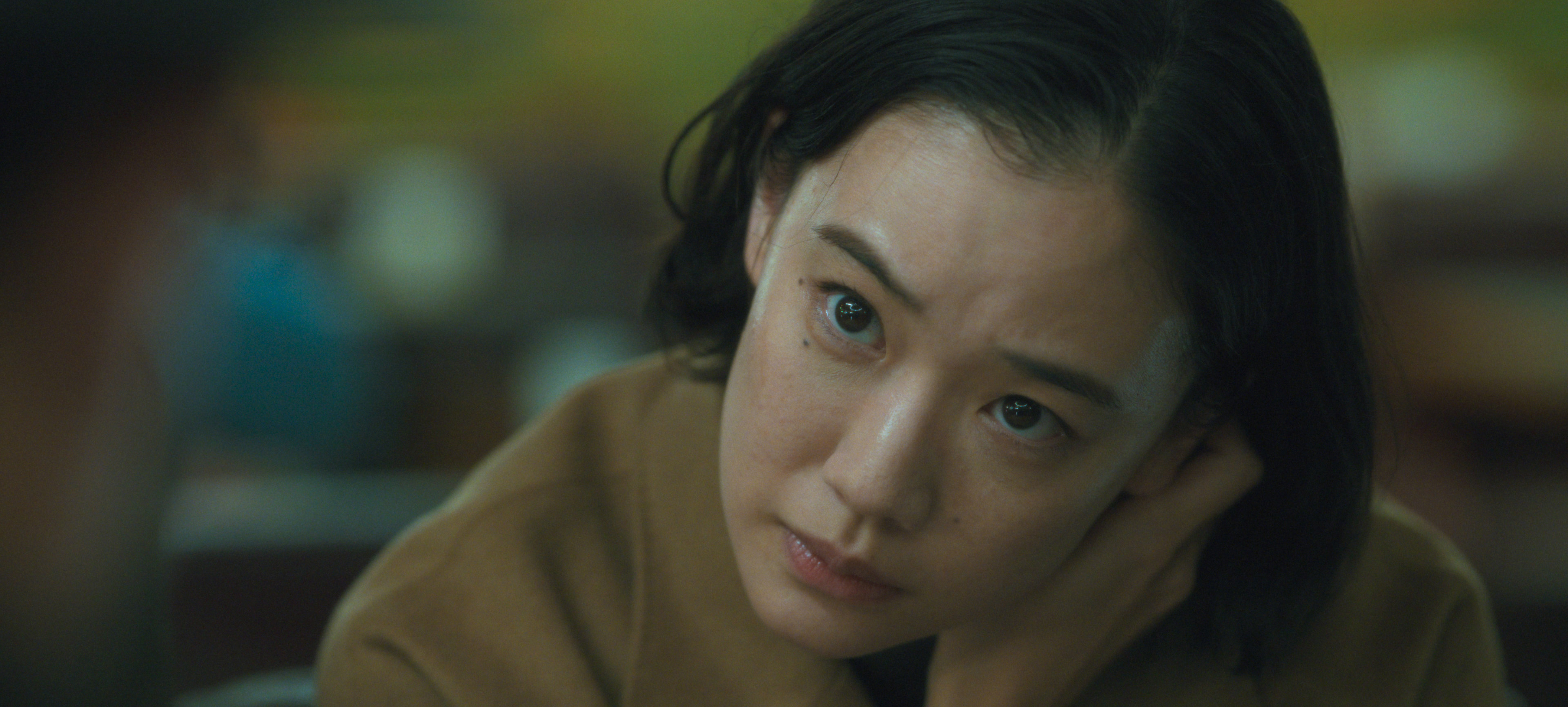 Reporter Kyoko Kono (Yu Aoi) in a scene from Episode 2. Photo courtesy of Netflix Japan. ©TOHO CO., LTD.
Shun Oguri and Yu Aoi: The Production Team's First Choices
Principal photography began in September 2024. In March 2024, Directors Yeon and Katayama held an in-person script retreat in Korea; in April, the screenplay was handed off from Director Yeon's side, and over the following three months, it was adapted for Japanese production and finalized as the shooting script by July. Even after filming began, revision work continued in parallel — meaning that from the start of active development in 2020, approximately four years were devoted to writing the screenplay. Throughout this process, offers to Shun Oguri for the role of Kenji and Yu Aoi for the role of Kyoko were made as early as 2022, driven by the conviction that "these two, and no one else" were envisioned for the role — and both accepted.
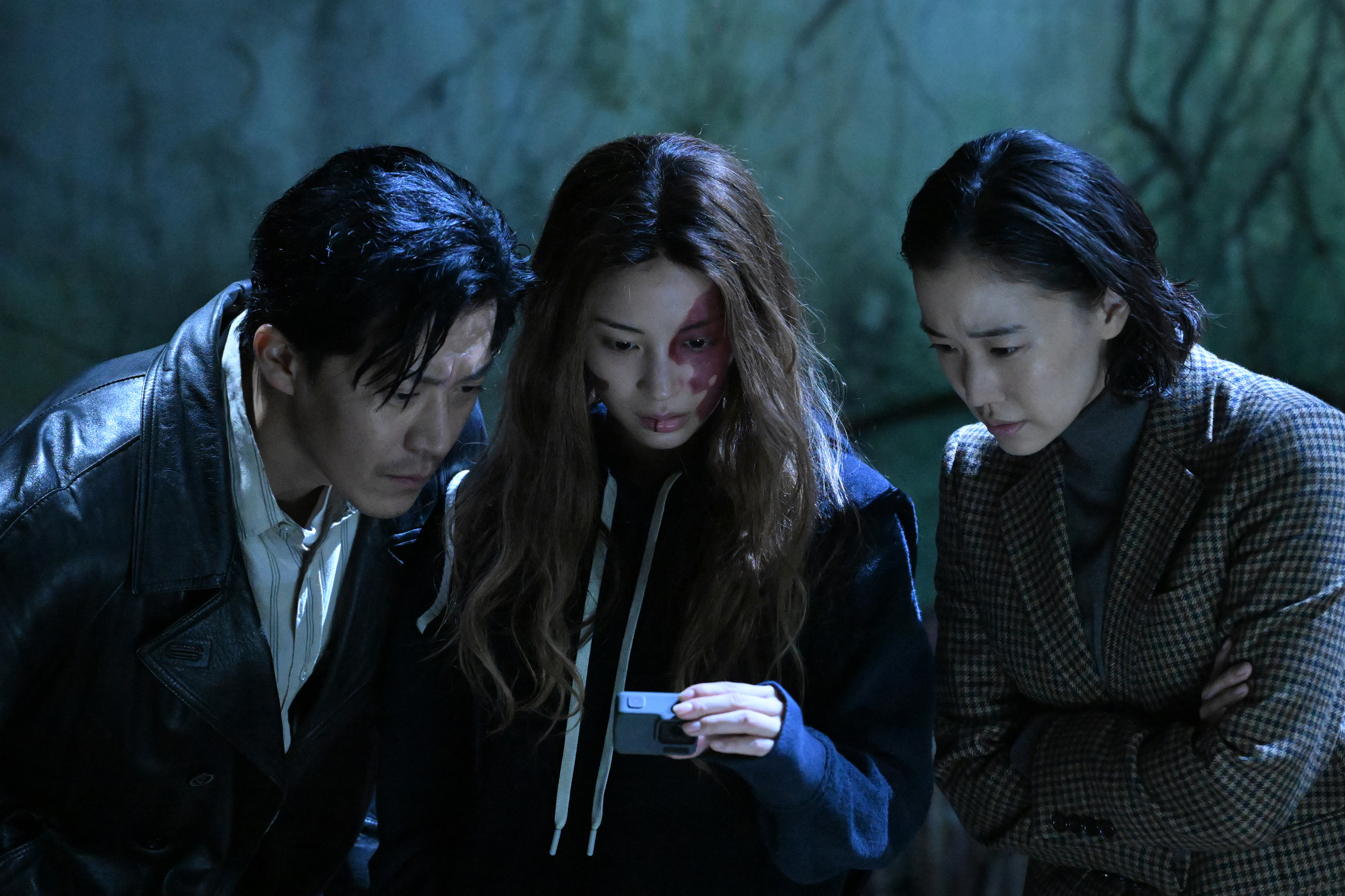 Photo courtesy of Netflix Japan. ©TOHO CO., LTD.
"The original THE HUMAN VAPOR is a tokusatsu film, but at its heart, it's a tragic love story. From the beginning, we communicated that while we'd change the structural bones of the story for the reboot, we wanted to preserve the love story element in some form. And since the characters are in their late thirties, we wanted it to be a bittersweet romance between adults carrying emotional wounds — rather than pure, innocent love — calibrated so as not to get in the way of the suspense and thriller elements the audience would expect. Given all that, when we thought about who should play these roles, the first names that came to mind were Shun Oguri and Yu Aoi. With this being our first streaming production and our first collaboration with Netflix and overseas creators, we absolutely could not afford to fail. We wanted actors we could trust unconditionally," Producer Hyo shares.
Beyond their acting ability to convey complex emotions through sheer presence, their high name recognition across Asia was also a significant factor. And the rarity of their first live-action co-starring role in 23 years — since the TV drama BLUE AND WHITE MAKE LIGHT BLUE (藍白水色, Aijiro Mizuiro, 2001) — was an important point as well. Thus, a fresh collaboration between two actors you truly can only see here was realized.
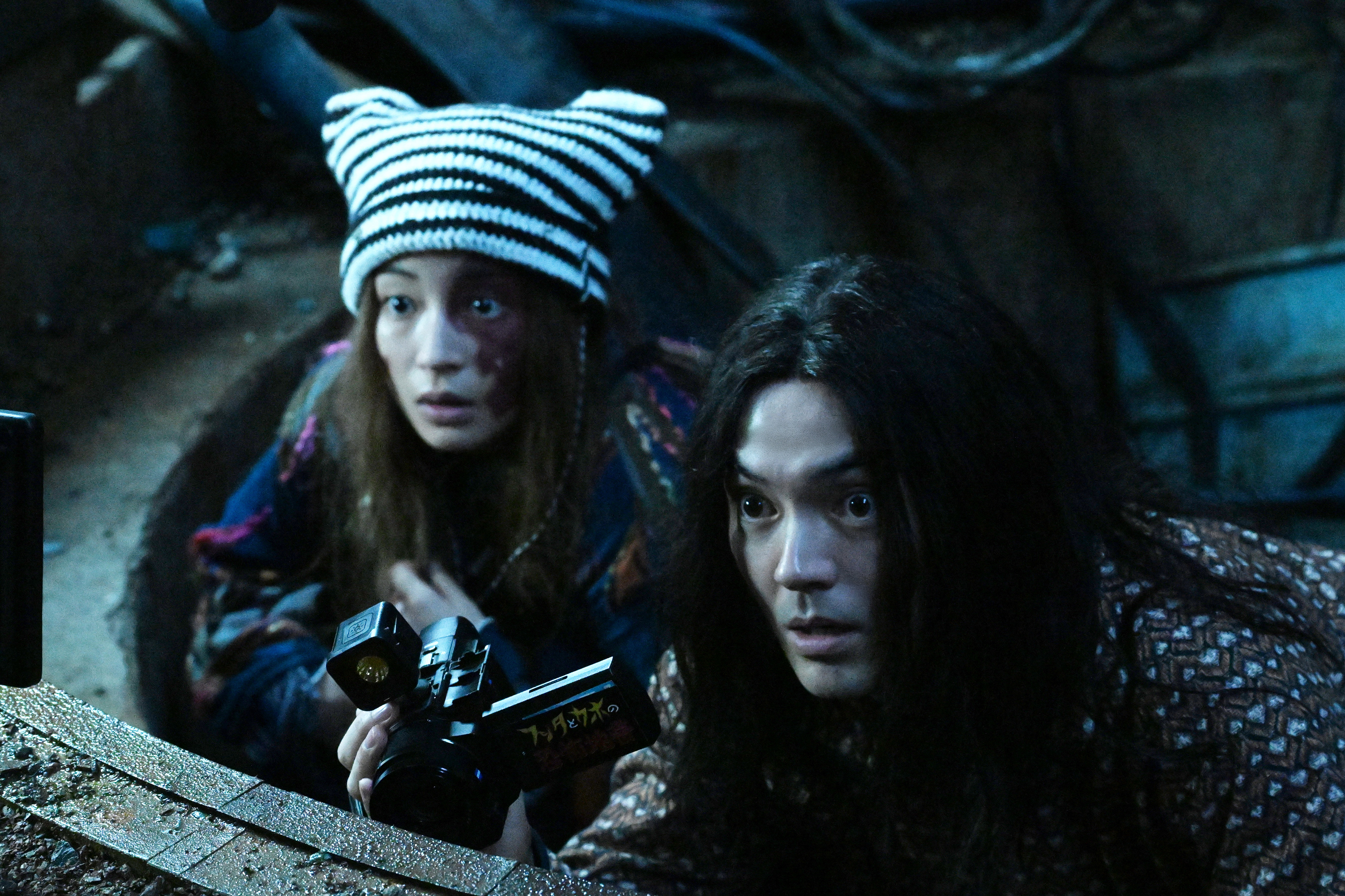 The sister and brother live-streamers, Kaho Fujikawa (Suzu Hirose) and Fujita Fujikawa (Kento Hayashi). Photo courtesy of Netflix Japan. ©TOHO CO., LTD.
Kento Hayashi and Suzu Hirose: The Trickster Siblings
Suzu Hirose and Kento Hayashi, playing a pair of live-streamer siblings, were cast in the autumn of 2023 through early 2024. "As we developed the screenplay episode by episode, I was completely blindsided when these siblings suddenly appeared in Episode 4," says Producer Hyo.
He continues, "As you'll see when you watch it, Episode 4 features almost none of the Human Vapor, Kenji, or Kyoko. It's entirely focused on two new characters — Kahō and Fujita. When I read the first draft, I instinctively asked Director Yeon, 'Is this okay?' But after listening to him explain his thinking, it clicked. It's an approach close to how manga works — when entering a new arc, you introduce new characters first and connect them to the main story later. I felt it was a storytelling method unique to Director Yeon's background, and I became fully convinced: 'If we can establish them as beloved tricksters, they'll become a weapon that keeps the whole story from ever getting boring.' So I went all in on this plan."
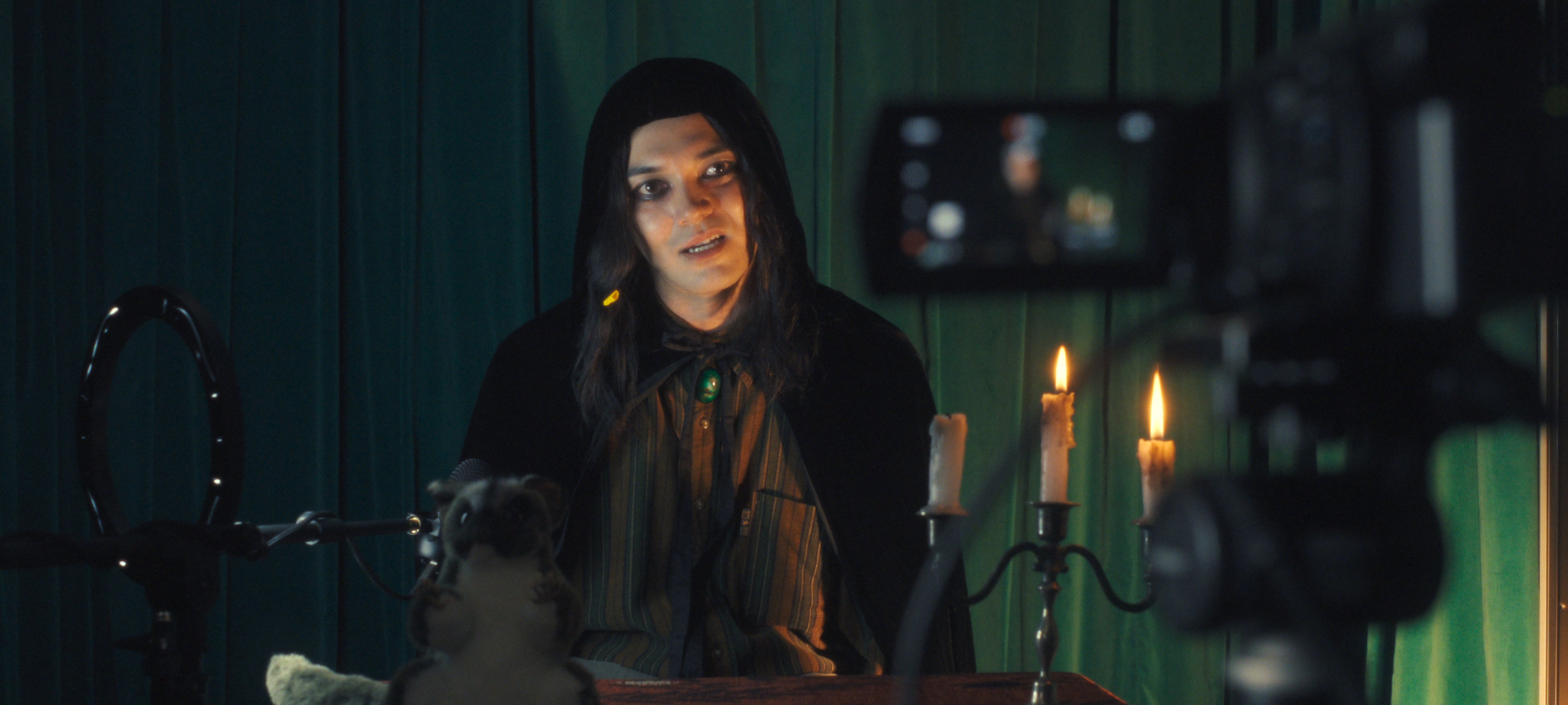 Photo courtesy of Netflix Japan. ©TOHO CO., LTD.
That said, it was a major gamble for the production team. The pressure of "if Kahō and Fujita don't land, viewers will drop off at Episode 4" made it imperative to secure actors who met strict criteria: "a truly one-of-a-kind presence" and "a pair who genuinely look like siblings." Furthermore, as the script was refined, the decision was made to "not depict the backstory of Kahō and Fujita in order to keep the story moving at a good pace" — which raised the bar for the performers considerably. But Hirose, who is in constant demand from acclaimed directors, and Hayashi, a veteran of Katayama's set, rose magnificently to the challenge.
"The siblings have diametrically opposite attitudes toward their situation. Fujita wants to escape their current life, while Kahō is content to stay as they are. That's why they respond differently when they discover a clue about the Human Vapor. The way the story unfolds dramatically as these siblings join forces with Kenji and Kyoko, each moving in their own direction — we were able to construct that flow beautifully, and it's entirely thanks to the four actors," Producer Hyo explains.
In addition to Hayashi, many members familiar with Director Katayama's set gathered for HUMAN VAPOR — chief among them Yutaka Takenouchi, who starred in THE WANDERING BLADE. Transformed to the point of being unrecognizable, he delivers a ferocious performance as Mori, the villain who holds the key to the Human Vapor's origin. Pay close attention to his every move — including how he becomes entangled in the story.
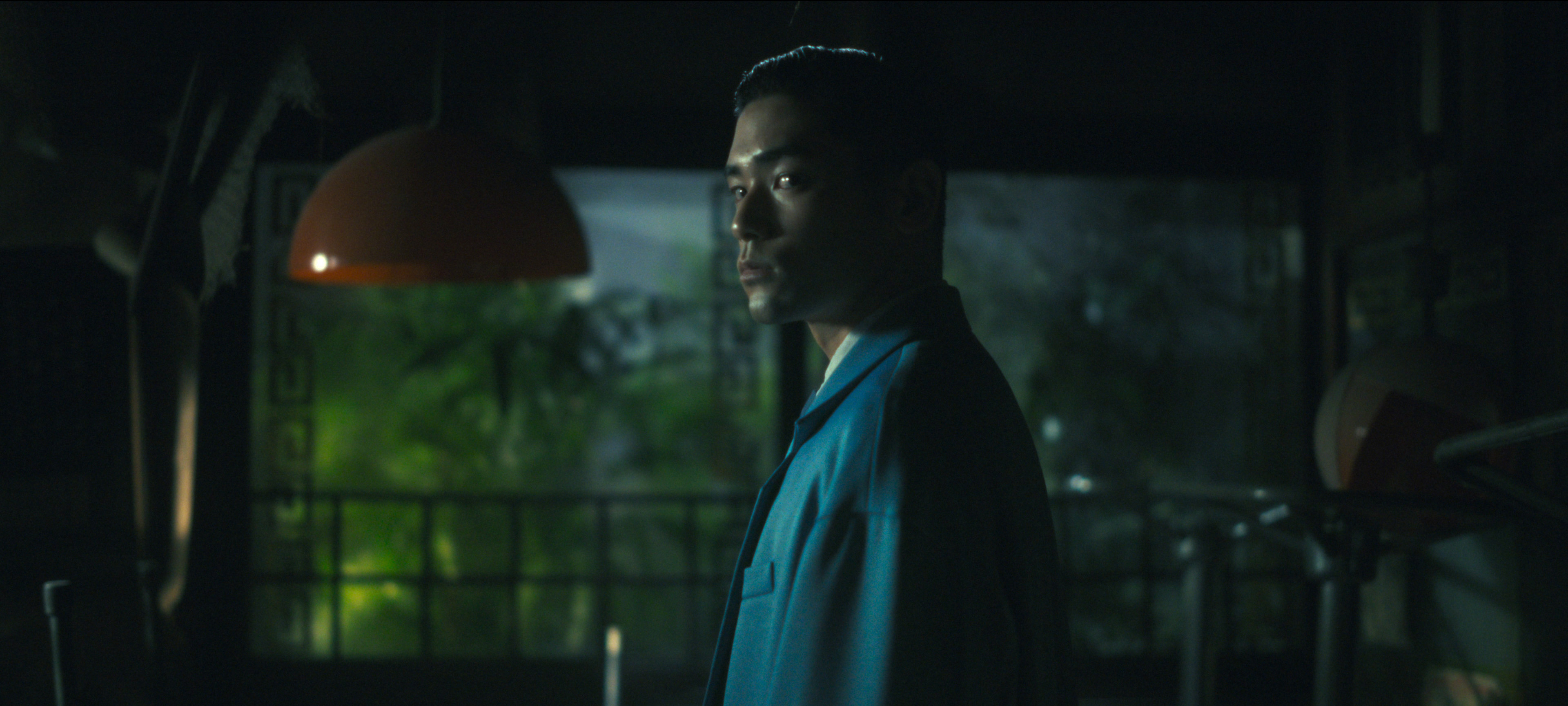 Model UTA makes his acting debut as the Human Vapor. Photo courtesy of Netflix Japan. ©TOHO CO., LTD.
The Extraordinary Presence of Newcomer UTA as the Human Vapor
Model UTA, who plays the Human Vapor, is making their acting debut with this series. "The biggest difference from the original film is that while the Human Vapor is the title character, they are not the protagonist. The story progresses with the Human Vapor as an object rather than a subject, so we wanted someone who could embody an unsettling, unknowable sense of dread. That led us toward wanting someone with a completely blank slate — an actor with no preconceived image. It was Director Katayama who recommended UTA," Producer Hyo shares.
When approached, UTA accepted immediately and committed to an extended period of acting training and physical transformation. Since UTA moved to the United States in high school and has spent much of their life as an English speaker, the production team brought in a Hollywood-based acting coach as support. Character design supervision was handled by Isao Tsuge — known for LUST IN THE RAIN, SHIN GODZILLA (シン・ゴジラ, Shin Gojira, 2016), and the THUS SPOKE KISHIBE ROHAN (岸辺露伴は動かない, Kishibe Rohan wa Ugokanai) series — who proposed a blue-grey long coat for the Human Vapor, helping to shape the visual image. Director Katayama's distinctive direction was then layered on top, completing the character's signature flat, affectless delivery and an intimidating presence that, once seen, cannot be forgotten.
The cast came together in a wonderfully varied fashion — and there were some delightful surprises along the way. Actors of the caliber of Munetaka Aoki and Kento Kaku apparently volunteered themselves, saying they wanted to be part of it. That, too, is a testament to THE HUMAN VAPOR being the landmark project of the era.
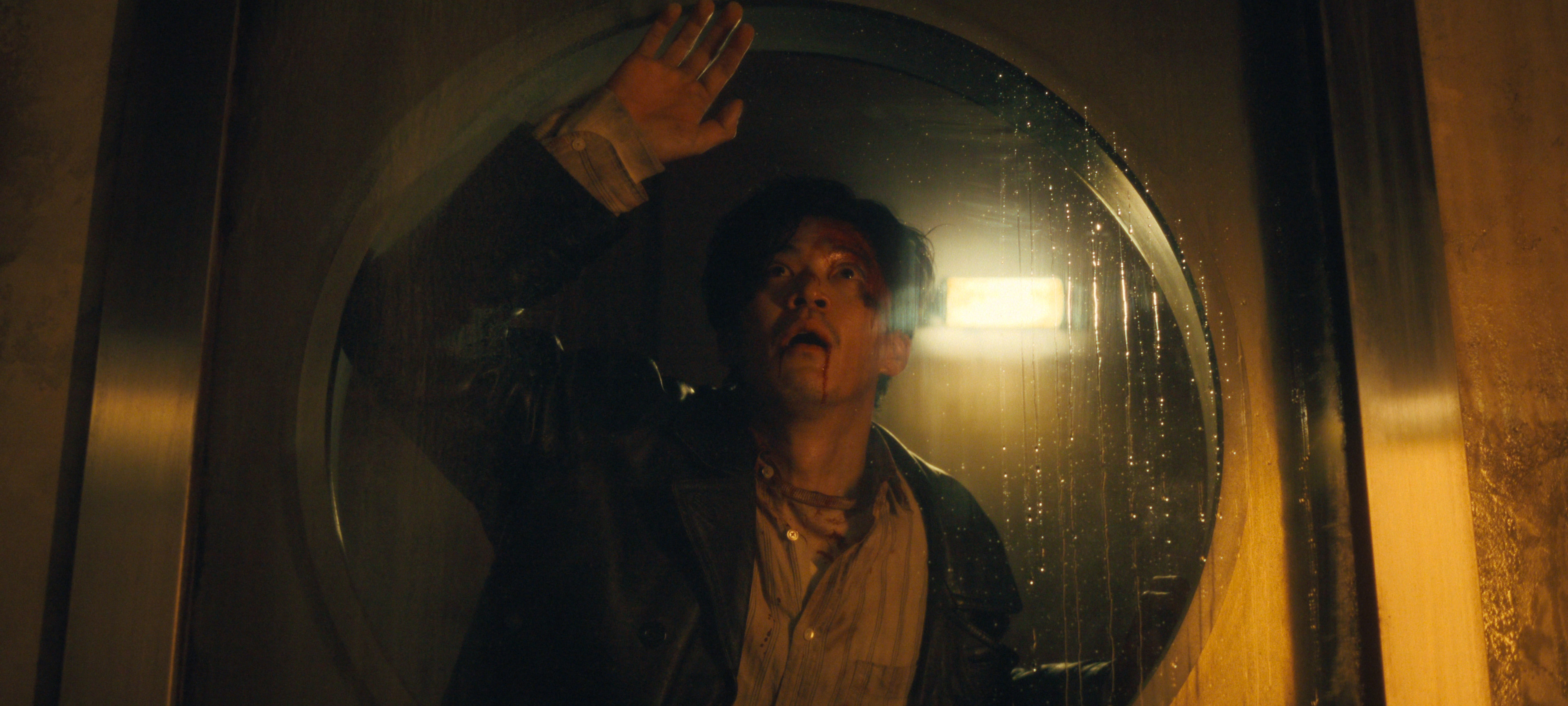 Photo courtesy of Netflix Japan. ©TOHO CO., LTD.
Eight Months of Filming × Director Katayama's Creative Method
Production spanned nearly eight months, from early September 2024 to the end of April 2025. Filming took place across approximately 150 locations — an exceptional scale. The content of the shoot was equally unprecedented throughout, with the standout example being a large-scale car action sequence filmed with a major section of the area in front of Tokyo Station closed off. The scene, which appears in Episode 3, required a year and a half of negotiations and preparation to realize. "Japan is a country where obtaining filming permits is notoriously difficult, but this proved that if you invest the time, it can be done. The length of time spent and the effort of every single staff member is genuinely embedded in the footage," Producer Onoda shares.
The sequence in which the Human Vapor bursts through a manhole and attacks a vehicle from below, causing the car to flip backwards, was also unprecedented. The team studied references including the truck-flip sequence in THE DARK KNIGHT (2008) — a front flip in that case — and went through extensive trial and error. The scenes set at the old and new Bunko Ramen restaurants in Episode 1 were also filmed with a large-scale closure in Shizuoka; for the old Bunko Ramen, an existing sushi restaurant was renovated and transformed into a run-down ramen shop. "It was one unprecedented thing after another, but it was all in pursuit of creating visuals that would keep audiences watching to the very last second," says Producer Hyo with pride.
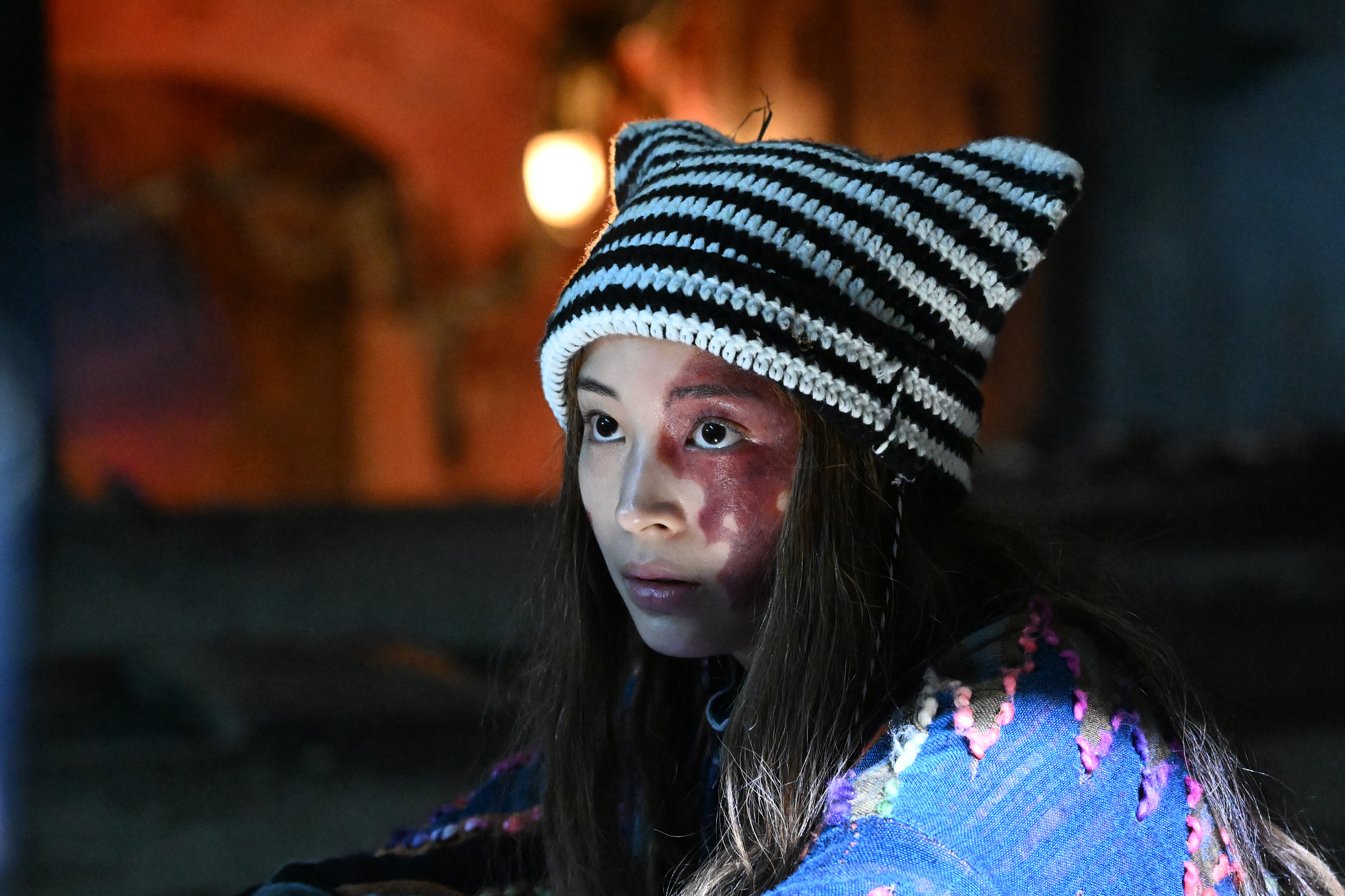 Photo courtesy of Netflix Japan. ©TOHO CO., LTD.
While the shoot was full of meticulously prepared sequences, Director Katayama's set is also known for its high degree of spontaneity. His style involves incorporating ideas that come to him on the day, on location, wherever possible — which demands flexibility from cast and crew alike. For example, in the aforementioned car action sequence, a "group doing yoga in front of Tokyo Station" — not in the script — was added, injecting humor into a thrilling scene. Lines were added for the Bunko Ramen owner, such as "I give each piece of chashu a name," deepening the character. This particular idea, incidentally, originated from the fact that Producer Onoda's family runs a ramen restaurant. Katayama keeps his antenna up even in casual conversation, readily incorporating anything that resonates — that's the Katayama method. In Episode 4, there's a scene of Fujita watching from a car as Kahō infiltrates a host club: "The snack Fujita is eating in that scene is something the director grabbed from the craft services table on the spot," Producer Onoda shares. No matter how large the scale grows, never losing the playful spirit and always finding room for humor — that is one of the great charms of this production.
This session-like methodology is consistent in his approach to directing actors as well. Rather than grinding through take after take, he makes various suggestions and captures the freshest, most alive moments. For one actor, he reportedly made an edgy request like "keep biting down on your back teeth the whole time you're speaking" — and many performers found themselves fired up by such challenges. Producer Hyo shares, "Director Katayama is above all an ideas person, and everyone — cast and crew — who experiences his set gets completely hooked. (laughs) He's someone who never gives up on making it interesting right up to the very last second." Producer Onoda adds, "He's someone who keeps searching for what's possible within the rules. When someone is that sincere about the craft, you can't help but push yourself to match it."
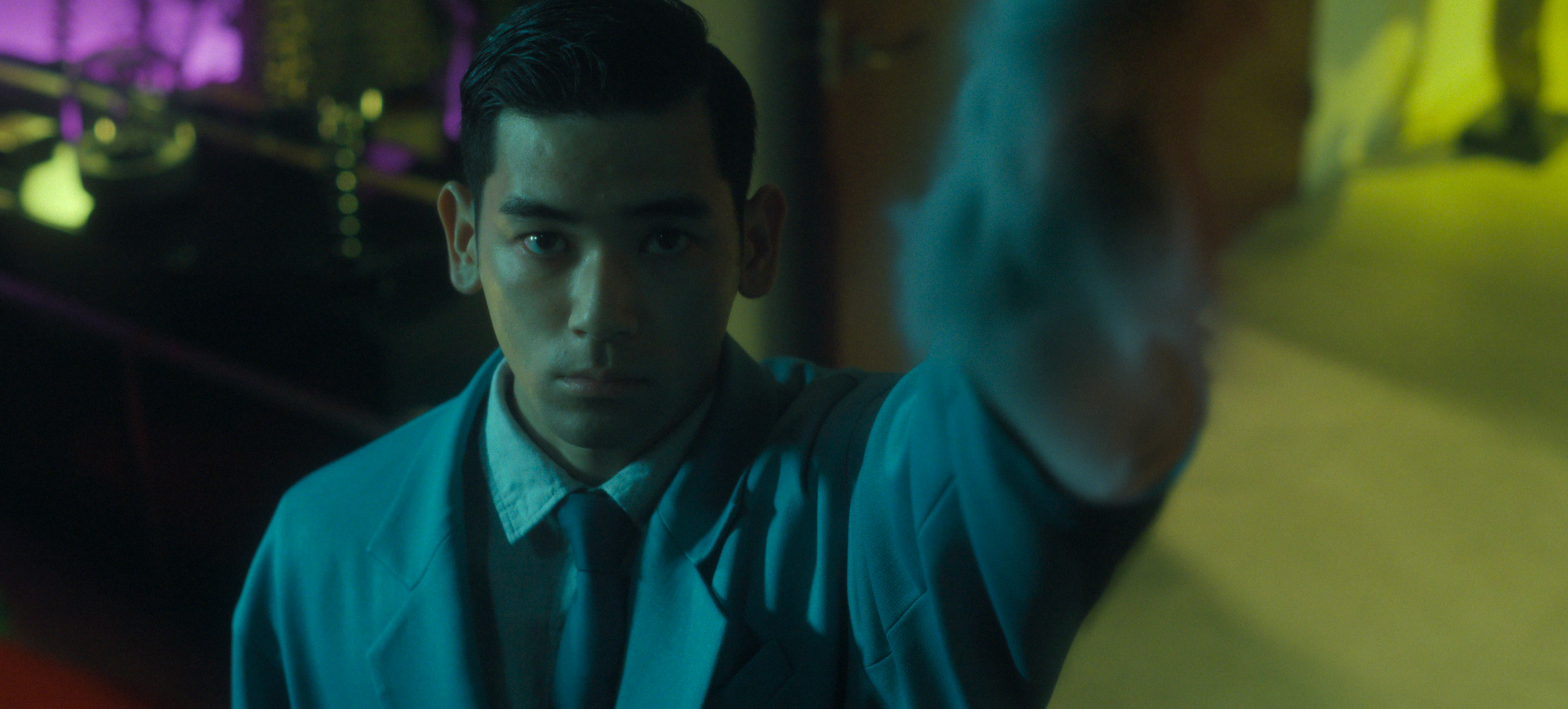 The Human Vapor shows his amazing abilities through VFX by Shirogumi, the vfx studio behind GODZILLA MINUS ONE. Photo courtesy of Netflix Japan. ©TOHO CO., LTD.
A Special VFX Team Assembled 18 Months Before Filming
One of the great highlights of THE HUMAN VAPOR is undoubtedly the inventive action sequences created through VFX. Shirogumi — the visual effects company that made history by winning the Academy Award for Best Visual Effects for GODZILLA MINUS ONE (ゴジラ-1.0/ゴジラマイナスワン, Gojira Mainasu Wan, 2023), the first Asian film ever to do so — joined the project and spent the year and a half before principal photography began refining the expression of gas through trial and error. "With CG, the tendency is to pour energy into post-production after filming — but this time, the real battle was how far we could nail down the direction of the CG during pre-production and even the development stage before that. So first, back in 2022, we reached out to manga artists and had them produce a large volume of concept art," Producer Hyo notes.
After having manga artists scouted through social media create around 200 pieces of concept art for the HUMAN VAPOR, Eyeline Studios — whose VFX supervisor Ryo Sakaguchi had worked on the Netflix series YU YU HAKUSHO (幽遊白書, 2023) — used those as reference to create nearly another 200 pieces of concept art translated into the language of CG. A pipeline was established to convert the manga/anime aesthetic into a photorealistic live-action style before handing it off to Shirogumi. From the outset, the central concept was "real, not fantasy." In the opening of Episode 1, the Human Vapor enters the body of a professor appearing on a TV program; the professor's body inflates and then ruptures, killing him. In HARRY POTTER AND THE PRISONER OF AZKABAN (2004), a nasty aunt is magically inflated like a balloon and floats away — but the Human Vapor brings a logic more firmly rooted in reality. "This was a manga artist's idea: if a body were inflated with gas, it would no longer be able to support its own weight, and the back would buckle — that kind of theory was adopted. We also consulted with specialists, and for the gas explosion scenes, we established rules like 'spreading the gas over a wide area and then rapidly contracting it amplifies the explosive force, and the core glows red at that moment," Producer Hyo notes.
"Gas, in a word, has six or seven different modes — gas that moves slowly like a ninja, gas that moves at high speed as seen in the car chase, gas rising from a human body, and so on. We had to think through each one for every situation, working it out in discussions between Director Katayama, Eyeline Studios, and Shirogumi," says Producer Hyo. While studying references including the Sandman in SPIDER-MAN 3 (2007) and SPIDER-MAN: NO WAY HOME (2021), a surprising idea came from Director Katayama: he wanted to show the process of gasification progressing in stages — skin, then muscle, then skeleton. It's an approach that could be seen as an evolution of the 2000 horror film HOLLOW MAN, and it became a showcase for the current state of the art. Another challenge for the team was how to visualize the Human Vapor in a dormant, statue-like state. The image of "Pepper the robot with the power switched off," suggested by Director Katayama, and the idea of "a tear falling and cracking the stone statue, triggering gasification" were incorporated to arrive at the final form.
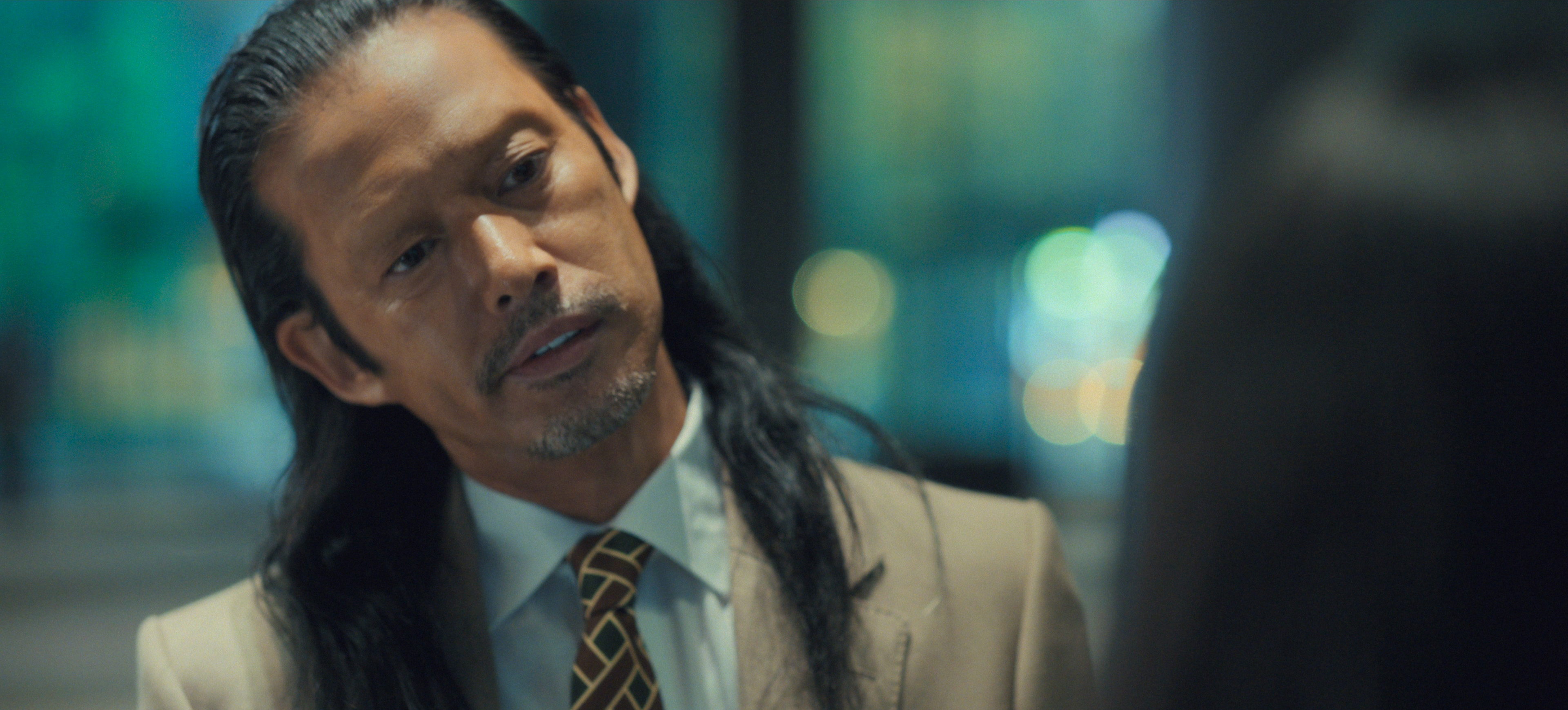 Former Yakuza, now company president, Yasutoshi Mori (Yutaka Takenouchi). Photo courtesy of Netflix Japan. ©TOHO CO., LTD.
Character Profiles
Kenji Okamoto (Shun Oguri) — Detective, First Investigative Division, Lieutenant. A compassionate man who cannot turn a blind eye to those in need. Following in his father's footsteps, he became a detective himself. He and Kyoko were once in a relationship, but a certain incident led to their breakup. He is assigned to the Human Vapor murder case and reunites with her.
Kyoko Kono (Yu Aoi) — News Reporter. A tough individual with an exceptionally strong sense of justice who fearlessly confronts anyone, regardless of who they are. She pursues the Human Vapor, who murdered her interview subject right before her eyes during a news program recording, determined to uncover the truth.
Kaho Fujikawa (Suzu Hirose) & Fujita Fujikawa (Kento Hayashi) — YouTube live-streamers. A pair of siblings who run an occult/urban legend channel. With few subscribers and virtually no following, they stumble upon a major secret about the Human Vapor and suddenly go viral.
The Human Vapor (UTA) — A mysterious figure who sends shockwaves across all of Japan. Able to transform their body into gas at will, their movements are truly unpredictable. They announce they will kill, one by one, everyone connected to a mysterious facility called the "White Center".
Yasutoshi Mori (Yutaka Takenouchi / Shuhei Nomura) — Former Yakuza, Listed Company President of Bit Money Trade, a company rife with dark rumors. Kenji had him in his sights as a suspect in a certain case, but was unable to build a case due to insufficient evidence.
Mamoru Sakamoto (Pierre Taki) — Superintendent General of the Metropolitan Police. An old friend of Kenji's father. He has looked out for Kenji since he lost his father at a young age, reinstating the suspended detective and assigning him to the Human Vapor case.
Saburo Otomo (Hideo Nakano) — Boss, Fujishiro-kai Designated Organized Crime Group. A yakuza whose life is being targeted by the Human Vapor. He uses his underlings to desperately search for a certain document.
Hiroki Obata (Yoshimi Sako / Ayumu Nakajima) — Director, Recreational Facility "Umikaze". A person who knows of the White Center's existence. Their life is being targeted by those connected to the facility at the time.
Mimi (Aoi Morikawa) — Former Member of Idol Group "Dream Succubus". Once active as a member of an underground idol group. Currently works at a video production company.
Kenta (Kento Kaku) — Male Host. Aspired to be an actor but never broke through, moving from a video production company to working at a host club. He serves Kaho when she visits seeking clues about the Human Vapor.
Kazumi Kirishima (Yui Natsukawa) — Gubernatorial Candidate. A rival candidate vying for the position of Tokyo Governor against Miura.
Takeshi Miura (Takashi Okabe) — Governor of Tokyo. Overwhelmed by the response to the Human Vapor terrorizing the city's residents. Seeking re-election as governor.
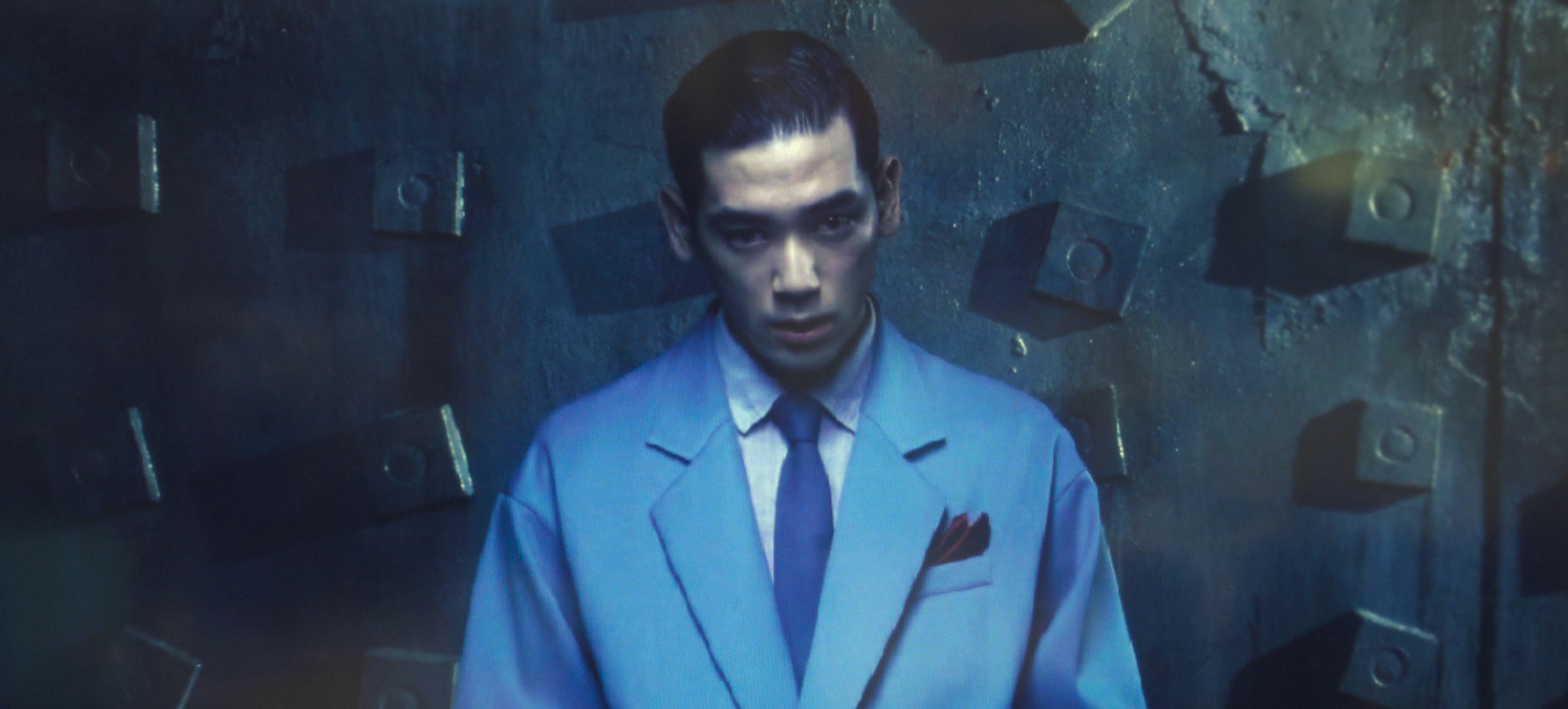 Photo courtesy of Netflix Japan. ©TOHO CO., LTD.
Staff Profiles
Director: Shinzo Katayama Born 1981 in Osaka. Served as assistant director on numerous works including Bong Joon-ho's TOKYO! (2008) and MOTHER (2009), before making his feature film directorial debut in 2018 with SIBLINGS OF THE CAPE, which he self-financed. The film received widespread acclaim both within and outside the industry. He has since directed the drama THE WANDERING BLADE (2021, WOWOW), the film MISSING (2022), and Disney+'s GANNIBAL (2022, 25).
Screenplay: Yeon Sang-ho Born 1978 in Seoul, South Korea. Debuted as an animation director before his 2016 live-action feature TRAIN TO BUSAN became a worldwide hit. He has since released PENINSULA (반도, Pando, 2020), Netflix series HELLBOUND (2021), and PARASYTE: THE GREY (2024).
Screenplay: Ryu Yong-jae Born 1977 in South Korea. Key screenwriting credits include the film PENINSULA (2020), Netflix series MONEY HEIST: KOREA – JOINT ECONOMIC AREA (종이의 집: 공동경제구역), Chongiŭi chip: kongdong kyŏngje kuyŏk, 2022), and PARASYTE: THE GREY (2024).
Music: Ko Omama Born 1988 in Tokyo. Key credits include the films GUKOROKU – TRACES OF SIN (愚行録, Gukoroku, 2017), LESSON IN MURDER (死刑にいたる病, Shikei ni Itaru Yamai, 2022), and SUSPECT (超意神探, Chāo yì shéntàn, 2024); Netflix series LAST SAMURAI STANDING (イクサガミ, Ikusagami, 2025); Disney+'s GANNIBAL Season 2 (2025); TV anime MOBILE SUIT GUNDAM: THE WITCH FROM MERCURY (機動戦士ガンダム 水星の魔女, Kidō Senshi Gandamu: Suisei no Majo, 2022) and BLUE BOX (アオのハコ, Ao no Hako, 2024–); as well as the NTV drama PRETTY PROOFREADER (地味にスゴイ! 校閲ガール・河野悦子, Jimi Ni Sugoi! Koetsu Girl Kouno Etsuko, 2016), Netflix series ASAKUSA KID (浅草キッド, Asakusa Kiddo), 2021), and many other anime and wide-ranging projects.
Cinematography: Naoya Ikeda Born 1980 in Kagawa Prefecture. Has collaborated with Director Katayama from SIBLINGS OF THE CAPE (2018) through LUST IN THE RAIN (2024). Other key credits include LESSON IN MURDER (2022), EGOIST (エゴイスト, Egoisuto, 2023), and 11 REBELS (十一人の賊軍, Jū ichi-ri no Zokugun). RHAPSODY, RHAPSODY (ラプソディ・ラプソディ, Rapusodi Rapusodi) opened May 1, 2026.
Production Design: Aiko Kuramoto Key credits include the films LAST LETTER (ストレター, Rasuto Retā, 2019), AND YOUR BIRD CAN SING (きみの鳥はうたえる, Kimi no Tori wa Utaeru, 2021), and LET'S GO! KARAOKE (カラオケ行こ! , Karaoke Iko!, 2023); Disney+'s GANNIBAL (2022–25). Also served as production design support on Netflix series THE CONFIDENCE MAN JP (コンフィデンスマンJP, Konfidensuman JP, 2024) and the TV drama SOUNDS OF WINTER (冬のなんかさ、春のなんかね, Fuyu no Nanka Sa, Haru no Nanka Ne, 2026).
Production Design: Hidefumi Onishi
VFX Producer: Hiromasa Inoue Born 1969 in Hiroshima Prefecture. Member of Shirogumi. Key VFX producer credits include SHIN ULTRAMAN (シン・ウルトラマン, Shin Urutoraman, 2022), GOODBYE, DON GLEES! (グッバイ、ドン・グリーズ! Gubbai, Don Gurīzu!, 2022), SHIN KAMEN RIDER (シン・仮面ライダー, Shin Kamen Raidā, 2023), and CELLS AT WORK! (はたらく細胞, Hataraku Saibō, 2024).
VFX Supervisor: Masanori Takahashi Born 1968 in Tokyo. Member of Shirogumi. Participated as CG/VFX director on ALWAYS: SUNSET ON THIRD STREET series (2005–2012) and THE ETERNAL ZERO (永遠の0, Eien no Zero, 2013). Served as CG director on GODZILLA MINUS ONE (2023), winning the Academy Award for Best Visual Effects at the 96th Academy Awards.
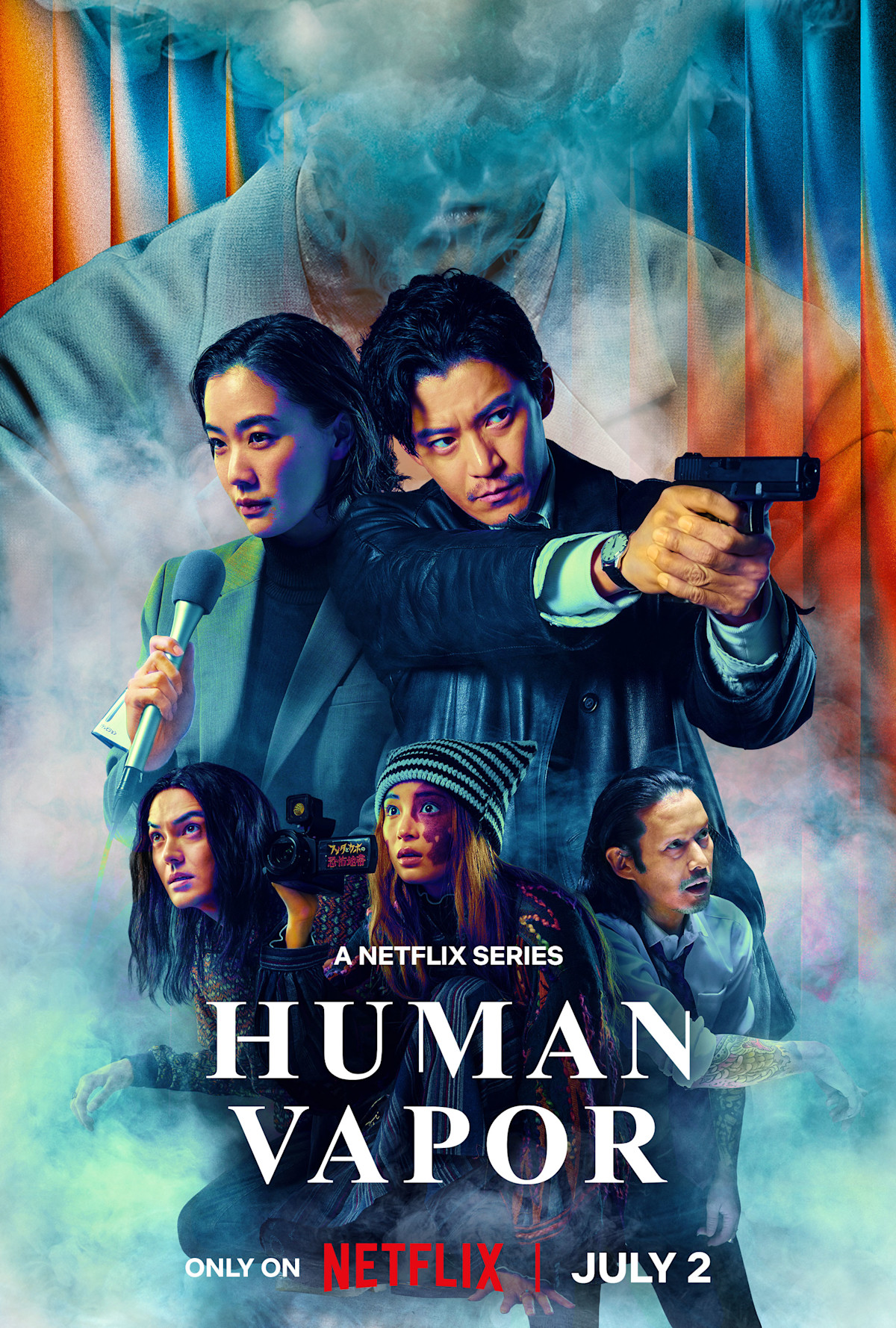 US key art. Photo courtesy of Netflix. ©TOHO CO., LTD.
 Japanese key art. Photo courtesy of Netflix. ©TOHO CO., LTD.
Details
Total Episodes: 8
All Eight Episodes Start Streaming Worldwide Thursday, July 2, 2026, Only On Netflix
Cast
Detective Kenji Okamoto: Shun Oguri
Reporter Kyoko Kono: Yu Aoi
Kaho Fujikawa: Suzu Hirose
Fujita Fujikawa: Kento Hayashi
Human Vapor: UTA
Yasutoshi Mori: Yutaka Takenouchi/Shuhei Nomura
Mamoru Sakamoto: PiereTaki
Saburo Otomo: Hideo Nakano
Hiroki Obata Yoshimi Sako/Ayumu Nakajima
Mimi: Aoi Morikawa
Kenta: Kento Kaku
Kazumi Kirishima: Yui Natsukawa
Governor Takeshi Miura: Takashi Okabe
Staff
Based on the Toho Film THE HUMAN VAPOR (Directed by Ishiro Honda / Written by Takeshi Kimura / FX by Eiji Tsuburaya)
Directed by: Shinzo Katayama
Written by: Yeon Sang-ho, Ryu Yong-jae
Executive Producers: Yeon Sang-ho, Minami Ichikawa, Keiji Ota, Hisashi Usui, Yoshihiro Sato (Netflix)
Executive Producers - Creative & Production Lead: Nen Hyo, Ryoji Kure
Producers: Sokichi Onoda, Yoomin Hailey Yang
Co-Executive Producer: Akihiro Yamauchi
Music Ko Omama
Cinematography: Naoya Ikeda
Production Design: Aiko Kuramoto, Hidefumi Onoshi
Concept Art: Isao Tsuge, Ryo Sakaguchi
VFX: Shirogumi
VFX Producer: Hiromasa Inoue
VFX Supervisors: Masanori Takahashi, Takumi Shinhori
Planning & Production: Toho
Co-Planning & Production: WOWPOINT
Production Company: TOHO Studios
Streaming: Netflix
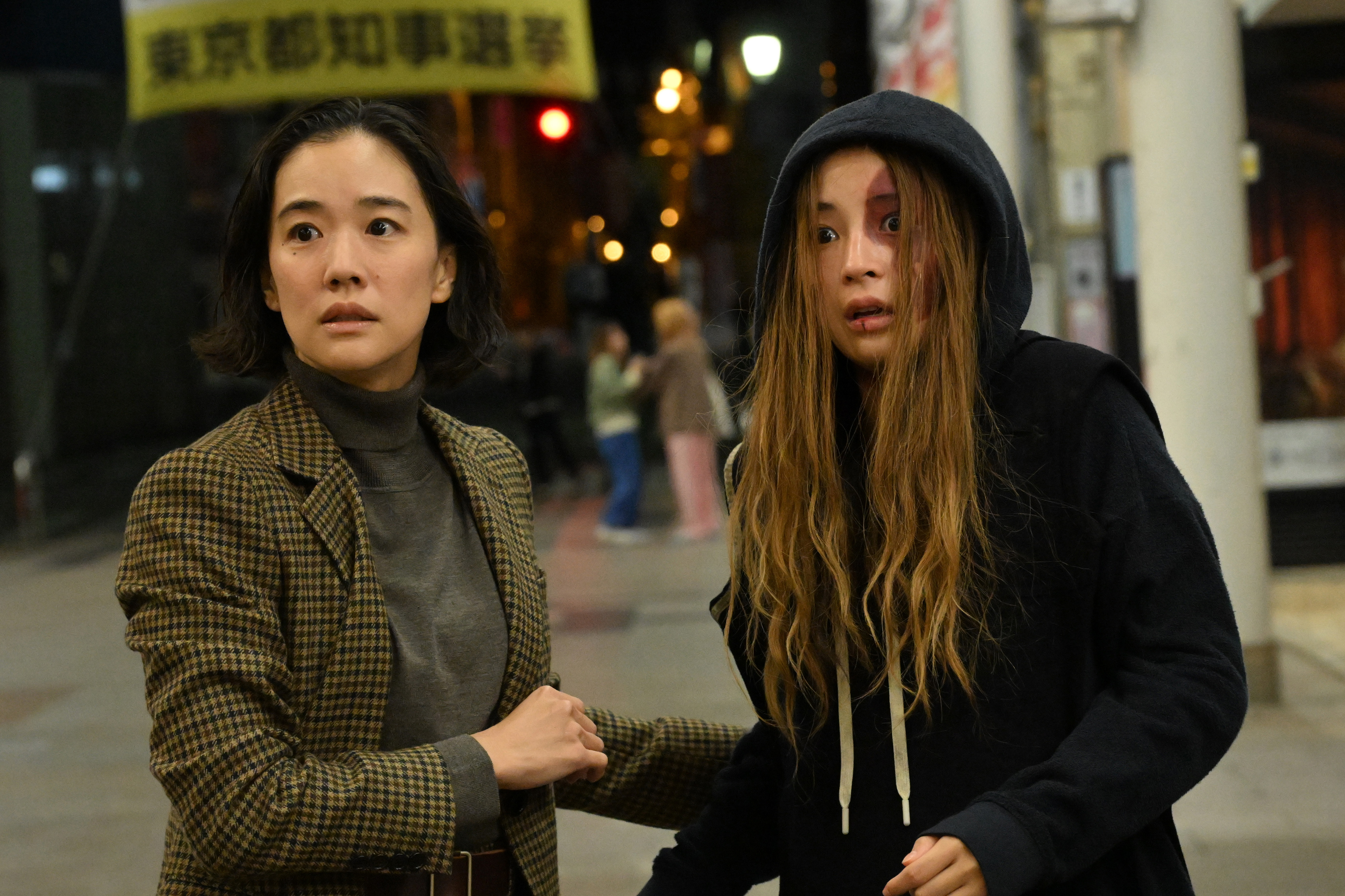 Photo courtesy of Netflix Japan. ©TOHO CO., LTD.
About Netflix
Netflix is the world`s leading streaming entertainment service with 193 million paid memberships in over 190 countries enjoying TV series, documentaries and feature films across a wide variety of genres and languages. Members can watch as much as they want, anytime, anywhere, on any internet-connected screen. Members can play, pause and resume watching, all without commercials or commitments.