A worthy perspective on the "the Brody family was boring" criticisms:
http://nerdgasming.com/post/86527221967 ... nrelatable

Monster Zero x SciFi Japan - Archive Only
The Board is Down with no repair ETR. My apologies but we don't have the money or resources to repair the issue. It is broken on the back-end and is only here to view as an archive. Thank you for your years of patronage.
TALKBACK: Godzilla (2014) - (OBVIOUS SPOILER DISCUSSION)
Moderator: Controllers
Re: TALKBACK: Godzilla (2014) - (OBVIOUS SPOILER DISCUSSION)
 by Shin_Edda_Robo!!!!! » Fri May 23, 2014 11:05 am

Ultraman. Is a Dick. A Big Dick.
-

Shin_Edda_Robo!!!!! - Burning Godzilla
- Posts: 3543
- Joined: Fri Aug 08, 2003 11:08 pm
- Location: Bannana Republic
Re: TALKBACK: Godzilla (2014) - (OBVIOUS SPOILER DISCUSSION)
by planetxleader » Fri May 23, 2014 11:09 am
"Vishnu takes on his multi-armed form, and says, "RAAAAAHHHOOO!!!'"
-

planetxleader - Heisei Godzilla
- Posts: 1835
- Joined: Tue Aug 05, 2003 11:42 pm
- Location: Georgia
Re: TALKBACK: Godzilla (2014) - (OBVIOUS SPOILER DISCUSSION)
by Hybrid Gojira » Fri May 23, 2014 11:29 am

-

Hybrid Gojira - Burning Godzilla
- Posts: 4372
- Joined: Sun Jul 20, 2003 1:04 pm
- Location: Cincinnati, Ohio
Re: TALKBACK: Godzilla (2014) - (OBVIOUS SPOILER DISCUSSION)
by Inferior Rodan » Fri May 23, 2014 11:34 am
-

Inferior Rodan - Godzilla
- Posts: 549
- Joined: Mon Aug 09, 2004 10:51 am
- Location: I fly around
Re: TALKBACK: Godzilla (2014) - (OBVIOUS SPOILER DISCUSSION)
by Hybrid Gojira » Fri May 23, 2014 11:37 am
-
Hybrid Gojira - Burning Godzilla
- Posts: 4372
- Joined: Sun Jul 20, 2003 1:04 pm
- Location: Cincinnati, Ohio
Re: TALKBACK: Godzilla (2014) - (OBVIOUS SPOILER DISCUSSION)
by RapZiLLa54 » Fri May 23, 2014 12:33 pm


-

RapZiLLa54 - Burning Godzilla
- Posts: 3520
- Joined: Sat Aug 09, 2003 7:11 pm
- Location: Monster Long Island
Re: TALKBACK: Godzilla (2014) - (OBVIOUS SPOILER DISCUSSION)
by RapZiLLa54 » Fri May 23, 2014 12:34 pm
-
RapZiLLa54 - Burning Godzilla
- Posts: 3520
- Joined: Sat Aug 09, 2003 7:11 pm
- Location: Monster Long Island
Re: TALKBACK: Godzilla (2014) - (OBVIOUS SPOILER DISCUSSION)
by GoDziLLaX » Fri May 23, 2014 1:12 pm
-
GoDziLLaX - Godzilla Jr.
- Posts: 222
- Joined: Wed Jan 14, 2004 11:57 pm
- Location: Boston, MA
Re: TALKBACK: Godzilla (2014) - (OBVIOUS SPOILER DISCUSSION)
by mrbluehair » Fri May 23, 2014 1:21 pm
I don't think we have to wait too long for the sequel, Star Wars and all, the thing is that I think we could draw a parallel between Lucas and Gareth.
Both had praised Indy type movies ( I still really like Ameriican Graffitti) then a big hit movie. Now George did create Star Wars where Gareth inherited Godzilla but both were thrust into the spotlight. Now if Gareth can balance them out then great, I think his Star Wars take will be very different than J.J. A's so it will be interesting yo see.
As long as he doesn't tinker like George he should be fine.
That said, Star Wars is being so played out its sad.
Both had praised Indy type movies ( I still really like Ameriican Graffitti) then a big hit movie. Now George did create Star Wars where Gareth inherited Godzilla but both were thrust into the spotlight. Now if Gareth can balance them out then great, I think his Star Wars take will be very different than J.J. A's so it will be interesting yo see.
As long as he doesn't tinker like George he should be fine.
That said, Star Wars is being so played out its sad.
You must show no mercy, nor have any belief whatsoever in how others judge you... for your greatness will silence them all!
-

mrbluehair - Heisei Godzilla
- Posts: 1376
- Joined: Fri Aug 06, 2004 9:21 pm
- Location: California
Re: TALKBACK: Godzilla (2014) - (OBVIOUS SPOILER DISCUSSION)
by Dorkzilla » Fri May 23, 2014 1:22 pm
After rewatching it a couple more times, I must say, the director's cut will probably be even better.
The movie as it stands now feels a bit short to be honest.
The movie as it stands now feels a bit short to be honest.
"Godzilla is a tragic love story about two romantic leads who went against all odds to find each other, only to be murdered by an obese serial killer with bad breath."
-

Dorkzilla - Godzilla Jr.
- Posts: 456
- Joined: Wed Feb 05, 2014 9:17 pm


Re: TALKBACK: Godzilla (2014) - (OBVIOUS SPOILER DISCUSSION)
by Hybrid Gojira » Fri May 23, 2014 1:32 pm
^ one could make the same argument about Godzilla. :/
-
Hybrid Gojira - Burning Godzilla
- Posts: 4372
- Joined: Sun Jul 20, 2003 1:04 pm
- Location: Cincinnati, Ohio
Re: TALKBACK: Godzilla (2014) - (OBVIOUS SPOILER DISCUSSION)
by Dorkzilla » Fri May 23, 2014 1:34 pm
It's a bit hypocritical for a Godzilla fan to state that Star Wars as a franchise should just die.
"Godzilla is a tragic love story about two romantic leads who went against all odds to find each other, only to be murdered by an obese serial killer with bad breath."
-
Dorkzilla - Godzilla Jr.
- Posts: 456
- Joined: Wed Feb 05, 2014 9:17 pm
Re: TALKBACK: Godzilla (2014) - (OBVIOUS SPOILER DISCUSSION)
by msweets13 » Fri May 23, 2014 1:35 pm
-

msweets13 - Godzilla Jr.
- Posts: 377
- Joined: Mon Dec 07, 2009 2:42 am
- Location: Fayetteville, AR
Re: TALKBACK: Godzilla (2014) - (OBVIOUS SPOILER DISCUSSION)
by Hybrid Gojira » Fri May 23, 2014 1:39 pm
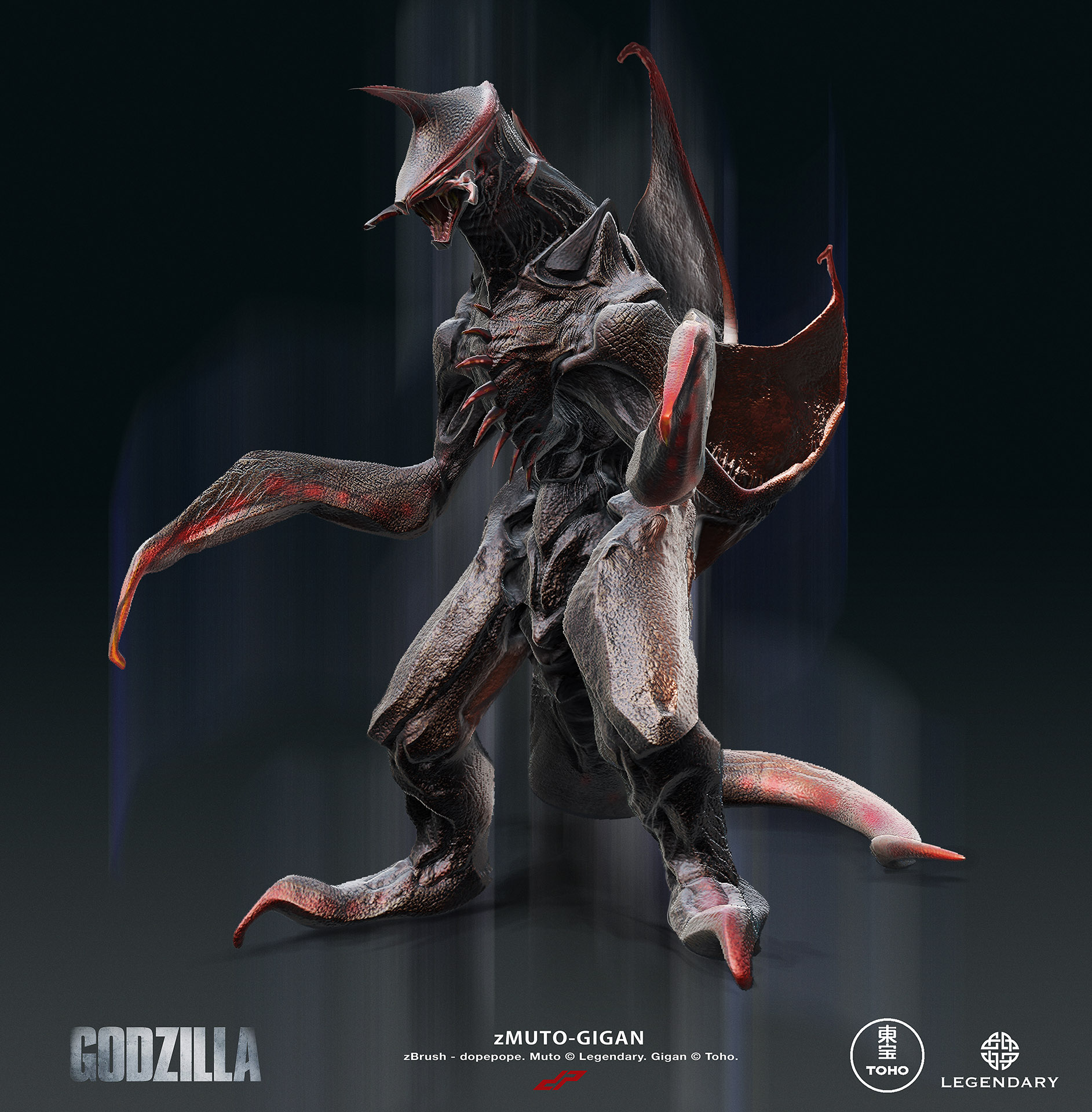
These have been floating around the interwebs.... For a fan design I kinda dig it.

-
Hybrid Gojira - Burning Godzilla
- Posts: 4372
- Joined: Sun Jul 20, 2003 1:04 pm
- Location: Cincinnati, Ohio


Re: TALKBACK: Godzilla (2014) - (OBVIOUS SPOILER DISCUSSION)
by mrbluehair » Fri May 23, 2014 3:33 pm
You must show no mercy, nor have any belief whatsoever in how others judge you... for your greatness will silence them all!
-
mrbluehair - Heisei Godzilla
- Posts: 1376
- Joined: Fri Aug 06, 2004 9:21 pm
- Location: California
Re: TALKBACK: Godzilla (2014) - (OBVIOUS SPOILER DISCUSSION)
by Gohi » Fri May 23, 2014 3:54 pm
Last edited by Gohi on Fri May 23, 2014 4:00 pm, edited 1 time in total.
- Gohi
- Baby Godzilla
- Posts: 86
- Joined: Tue Jun 08, 2004 3:17 am
- Location: MN
Re: TALKBACK: Godzilla (2014) - (OBVIOUS SPOILER DISCUSSION)
by Hybrid Gojira » Fri May 23, 2014 3:56 pm
Last edited by Hybrid Gojira on Fri May 23, 2014 4:07 pm, edited 1 time in total.
-
Hybrid Gojira - Burning Godzilla
- Posts: 4372
- Joined: Sun Jul 20, 2003 1:04 pm
- Location: Cincinnati, Ohio
Re: TALKBACK: Godzilla (2014) - (OBVIOUS SPOILER DISCUSSION)
by Dai » Fri May 23, 2014 3:58 pm
-

Dai - Heisei Godzilla
- Posts: 1183
- Joined: Fri Jul 13, 2007 12:07 pm
- Location: UK
Re: TALKBACK: Godzilla (2014) - (OBVIOUS SPOILER DISCUSSION)
by Jorzilla » Fri May 23, 2014 3:59 pm
-

Jorzilla - Heisei Godzilla
- Posts: 1512
- Joined: Sat Aug 09, 2003 2:39 am
- Location: Seattle
Re: TALKBACK: Godzilla (2014) - (OBVIOUS SPOILER DISCUSSION)
by MrShape666 » Fri May 23, 2014 4:49 pm
I saw this last Tuesday, adorned in my Godzilla Vs. Gamera Famous Monsters T-Shirt. Here are my thoughts:
Overall, I’d say this is a damn good monster movie. And a really good Godzilla movie. It has a few major flaws in it, but it’s pretty well made. The special effects in the film are very good, highly realistic, and Godzilla looks massive on the screen (especially in Imax). And it’s possessed of a somber, highly serious tone with very few attempts at the ‘comic relief’ which many filmmakers usually dilute their films with.
I found the Mutos to be interestingly realized, especially with the size ratio male to female. In many animal species, the female, being responsible for protecting the young, are often bigger and therefore more intimidating to a predator, while the male, being responsible for providing the food, can be smaller, lighter and more maneuverable for hunting. This is a common arrangement with animals in which the male hunts and the female protects the young. It’s not often that you see this common natural arrangement applied to movie monsters.
Oddly enough, a lot of this reminded me more of Shosuke Kaneko’s Gamera movies than any previous Godzilla films. Especially in the notion that Godzilla and the Mutos are ancient pre-dinosaurian animals and that Godzilla is their natural enemy, which recalls the situation between Gamera and the Gyoas (although they were biologically engineered by an ancient civilization, rather than being natural creatures).
Another interesting touch was the notion of Godzilla being an ancient pre-dinosaurian creature, roaming the Earth when it was highly radioactive. This makes for a certain amount of believability, because he would have to have pre dated the pre dinosaurian reptiles and other life forms, and as such, it would be doubtful that much trace of his species’ existence would be left in the fossil record. Not a totally realistic concept, but we are watching a movie about a three hundred foot monster, so disbelieve can be adequately suspended.
As the original Godzilla resonated with event that were fresh in the public mind at the time, so too does Edward’s film: Images call to mind not only the Fukushima disaster in the meltdown sequences, but also Chernobyl in the scenes of the empty, abandoned and desolate city, overgrown with vegetation and littered with remnants of the sudden mad exodus from the city, just like the spooky, often very poignant and depressing, remains of Pripyat City, which went from a bustling workman’s town to one of the creepiest places on the planet in a few days. Also, the scene of Godzilla arriving in a massive tidal wave brings to mind the Tsunami’s in Japan and Indonesia.
This is in marked contrast to Gino’s attempt at being topical, including but only playing lip service to the ill-advised French nuclear tests in the South Pacific. Gino makes no attempt to comment on the fact that the last bomb they set off was so powerful it cracked the island. And if that crack ever widens and the island’s structure collapses into the sea . . .
The film does have a few major flaws, however. I’m in agreement with others who say this movie could have used some more monster carnage footage. Not that it should be filled front to back with the kaiju version of the UFC, but in places it could have benefited from some more kaiju spectacle. It’s not so much that we have to wait so long to see Godzilla, the film keeps us involved and keeps up the action and drama in ways that hold your interest and build up the expectations. Plus, in many Godzilla films his arrival has been a long time coming, it nothing we're not used to. No, rather, my problem was that Edwards showed a curious aversion to showing the monster battles during the whole middle part of the movie after the Big G’s appearance. Three times, Edwards sets up a monster smash up only to cut away to something else and deny us the spectacle: The first time is after Godzilla’s impressive first appearance, the camera trailing up from his feet to reveal the full monster in all his glory as he roars and angry challenge to the Muto. Then the film cuts to Elizabeth Olsen’s character and we never see the fight except for a few seconds on TV. This happens again when the big female begins to smash her way through Los Vegas. After scant seconds of buildings falling, Edwards again cuts away, and all we see are a few bits of the rampage on TV screens. What happened in Vegas stayed in Vegas! By the time Godzilla attacked the female for the first time and pushed her towards the edge of the screen, I knew what was going to happen: Sure enough, Edwards cut and we missed the first part of the scuffle. Edwards and scripter Max Borenstein have said that the lack of monster footage is to build suspense. While that does work with Godzilla’s delayed appearance, these cut aways are just frustrating, not suspenseful. Really, Edwards would only have had to add a few minutes, maybe eight to ten minutes worth, of extra monster footage and he still would have been a long way away from the hyperkinetic, physically painful to watch cinema of Michael Bay.
After these three cheats, the film picks up immensely and we are treated to the rampaging monster battles that we’ve been waiting for. The battles and action packed, fast paced, but easy to follow. Many summer Hollywood films display action (like the aforementioned Michael Bay) that is so hyper kinetic and rapid fire edited that it’s impossible to see what’s going on the viewer just ends up with a migraine. Not so here, the action is easy to follow and easy to watch. Kaiju have rarely looked so massive and huge on the screen before, and we are well treated to the epic scale now possible with current technology.
In fact, the kaiju looked so massive that it looked rather ridiculous to see all those soldiers trying to shoot at them with M16s. Even more more so when Taylor-Johnson pulls out his little popgun and points it the female Muto, but, y’know, what else was he gonna do?
Edwards probably wanted to emphasize the human drama, which fortunately for us is very good and involving, even though Aaron Taylor-Johnson sleepwalks through his role like Joaquin Phoenix at his stoned looking worst. He’s more than made up for by the performances by Bryan Cranston, whose almost palatable grief and frustration is felt in all his scenes, and Ken Wantabe, who brings a pensive, guilt ridden look to his role. Elizabeth Olsen (who seems to have inherited her older sister’s wide anime like eyes) is an often underrated actress, who does fine here although her acting get literally buried under the rubble a bit. The human drama, fortunately, moves the film forward and an even pace and keeps our interest. You don’t need Shakespearean Academy Award winning drama in a monster film (that is not to say, however, that you can’t have it), but the human scenes need to keep the movie going and keep up the interest. In Roland Emmerich’s Godzilla, the human drama didn’t move the movie forward at all, and in fact, the film stopped dead any time the monster or Jean Reno wasn’t on the screen. There was nothing in the new film that made me cringe as much as Mathew Broderick intoning “Ohmygodshetookthetape” like a first year acting student whose caffeine buzz had just worn off.
Edwards stages some fantastic sequences. The ones that stand out in my mind are the scene where the two soldiers are hiding on the bridge while the Muto move about it, at any moment threatening to rip their precarious perch into kindling. Also noteworthy is the scene when Godzilla collapses beaten and exhausted, and spies Taylor-Johnson lying there in a similar state. A strange look of sympathy crosses Godzilla’s face as he sees that the tiny human is as black and blue as he is.
It is definitely good to see Godzilla finally using his atomic ray in an American film. As I’ve stated before, all previous American attempts at Godzilla, like Gino and the Hanna Barbara versions, tend to have Godzilla breathing fire like a dragon. Not only that, but it’s handled quite well: with the glow on his spines starting at the tip of the tale and then racing up his back until it explodes out of his mouth. One of the soldiers says it all when he gasps “Holy "OH GODZILLA! WHAT TERRIBLE LANGUAGE!"! Did you see that?”
As for the design of Godzilla, it’s basically and decent Godzilla. It looks like Edward’s team worked pretty hard to give the monster an organic quality to it. I’d say that the Japanese fan were right, however, that he does look a little chubby. It’s sort of like the thunder thighs Godzilla started using thigh master but it all went to his belly instead. Still, he looks very cool and very impressive on screen. I’ve always thought that any American Godzilla should be different from the Japanese Godzilla. For better or worse, and American Godzilla should be our Godzilla, not just a transplant of Toho’s version. Gino, of course, was not our Godzilla, but a whole new monster entirely. He did look cool, it was a great design, but not Godzilla. My only major gripe are the stubby Barney feet which look ridiculous during his first appearance at the airport. But its still a very good design, although I wouldn't rank it up there with my favorites like the GMK Godzilla. What’s really nice is that the FX team managed to wring a lot of emotion out of the reptilian face. It was probably a good idea on Edward’s part to hire Andy Serkis as the motion capture consultant, although he didn’t play Godzilla himself.
Like any Hollywood scripts, there seem to be a few bits that don’t make a lot of sense. The marines managed to hot wire a boat after the Muto’s EMP, which should have fried the electrical circuits. And I had to chuckle at the notion of taking the nuclear bomb twenty miles off the coast “where it won’t hurt anybody” . . . until all that radioactive ocean water washes up on the beaches and renders the whole coast of California uninhabitable! There no way to quarantine a part of the ocean, it's constantly moving. Imagine all those surfers with their bleach blonde hair falling out! I don’t think having millions die slowly later rather than quickly now was much of plan.
As for the score, I thought it was competent, but not particularly memorable. I would have liked some of the Ifukube themes to be worked into the music, but film scorers are notoriously willing to stick needles in their eyes rather than use another composers cues.
So, all in all, I’ll be going see this one again and I’ll be getting it on Blu Ray. And I’m going to be waiting with baited breath for the sequel.
Who knows, maybe the new franchise will do so well Legendary will produce a Gamera movie? Then maybe we could get that Godzilla Vs. Gamera movie we’ve always wanted.
Overall, I’d say this is a damn good monster movie. And a really good Godzilla movie. It has a few major flaws in it, but it’s pretty well made. The special effects in the film are very good, highly realistic, and Godzilla looks massive on the screen (especially in Imax). And it’s possessed of a somber, highly serious tone with very few attempts at the ‘comic relief’ which many filmmakers usually dilute their films with.
I found the Mutos to be interestingly realized, especially with the size ratio male to female. In many animal species, the female, being responsible for protecting the young, are often bigger and therefore more intimidating to a predator, while the male, being responsible for providing the food, can be smaller, lighter and more maneuverable for hunting. This is a common arrangement with animals in which the male hunts and the female protects the young. It’s not often that you see this common natural arrangement applied to movie monsters.
Oddly enough, a lot of this reminded me more of Shosuke Kaneko’s Gamera movies than any previous Godzilla films. Especially in the notion that Godzilla and the Mutos are ancient pre-dinosaurian animals and that Godzilla is their natural enemy, which recalls the situation between Gamera and the Gyoas (although they were biologically engineered by an ancient civilization, rather than being natural creatures).
Another interesting touch was the notion of Godzilla being an ancient pre-dinosaurian creature, roaming the Earth when it was highly radioactive. This makes for a certain amount of believability, because he would have to have pre dated the pre dinosaurian reptiles and other life forms, and as such, it would be doubtful that much trace of his species’ existence would be left in the fossil record. Not a totally realistic concept, but we are watching a movie about a three hundred foot monster, so disbelieve can be adequately suspended.
As the original Godzilla resonated with event that were fresh in the public mind at the time, so too does Edward’s film: Images call to mind not only the Fukushima disaster in the meltdown sequences, but also Chernobyl in the scenes of the empty, abandoned and desolate city, overgrown with vegetation and littered with remnants of the sudden mad exodus from the city, just like the spooky, often very poignant and depressing, remains of Pripyat City, which went from a bustling workman’s town to one of the creepiest places on the planet in a few days. Also, the scene of Godzilla arriving in a massive tidal wave brings to mind the Tsunami’s in Japan and Indonesia.
This is in marked contrast to Gino’s attempt at being topical, including but only playing lip service to the ill-advised French nuclear tests in the South Pacific. Gino makes no attempt to comment on the fact that the last bomb they set off was so powerful it cracked the island. And if that crack ever widens and the island’s structure collapses into the sea . . .
The film does have a few major flaws, however. I’m in agreement with others who say this movie could have used some more monster carnage footage. Not that it should be filled front to back with the kaiju version of the UFC, but in places it could have benefited from some more kaiju spectacle. It’s not so much that we have to wait so long to see Godzilla, the film keeps us involved and keeps up the action and drama in ways that hold your interest and build up the expectations. Plus, in many Godzilla films his arrival has been a long time coming, it nothing we're not used to. No, rather, my problem was that Edwards showed a curious aversion to showing the monster battles during the whole middle part of the movie after the Big G’s appearance. Three times, Edwards sets up a monster smash up only to cut away to something else and deny us the spectacle: The first time is after Godzilla’s impressive first appearance, the camera trailing up from his feet to reveal the full monster in all his glory as he roars and angry challenge to the Muto. Then the film cuts to Elizabeth Olsen’s character and we never see the fight except for a few seconds on TV. This happens again when the big female begins to smash her way through Los Vegas. After scant seconds of buildings falling, Edwards again cuts away, and all we see are a few bits of the rampage on TV screens. What happened in Vegas stayed in Vegas! By the time Godzilla attacked the female for the first time and pushed her towards the edge of the screen, I knew what was going to happen: Sure enough, Edwards cut and we missed the first part of the scuffle. Edwards and scripter Max Borenstein have said that the lack of monster footage is to build suspense. While that does work with Godzilla’s delayed appearance, these cut aways are just frustrating, not suspenseful. Really, Edwards would only have had to add a few minutes, maybe eight to ten minutes worth, of extra monster footage and he still would have been a long way away from the hyperkinetic, physically painful to watch cinema of Michael Bay.
After these three cheats, the film picks up immensely and we are treated to the rampaging monster battles that we’ve been waiting for. The battles and action packed, fast paced, but easy to follow. Many summer Hollywood films display action (like the aforementioned Michael Bay) that is so hyper kinetic and rapid fire edited that it’s impossible to see what’s going on the viewer just ends up with a migraine. Not so here, the action is easy to follow and easy to watch. Kaiju have rarely looked so massive and huge on the screen before, and we are well treated to the epic scale now possible with current technology.
In fact, the kaiju looked so massive that it looked rather ridiculous to see all those soldiers trying to shoot at them with M16s. Even more more so when Taylor-Johnson pulls out his little popgun and points it the female Muto, but, y’know, what else was he gonna do?
Edwards probably wanted to emphasize the human drama, which fortunately for us is very good and involving, even though Aaron Taylor-Johnson sleepwalks through his role like Joaquin Phoenix at his stoned looking worst. He’s more than made up for by the performances by Bryan Cranston, whose almost palatable grief and frustration is felt in all his scenes, and Ken Wantabe, who brings a pensive, guilt ridden look to his role. Elizabeth Olsen (who seems to have inherited her older sister’s wide anime like eyes) is an often underrated actress, who does fine here although her acting get literally buried under the rubble a bit. The human drama, fortunately, moves the film forward and an even pace and keeps our interest. You don’t need Shakespearean Academy Award winning drama in a monster film (that is not to say, however, that you can’t have it), but the human scenes need to keep the movie going and keep up the interest. In Roland Emmerich’s Godzilla, the human drama didn’t move the movie forward at all, and in fact, the film stopped dead any time the monster or Jean Reno wasn’t on the screen. There was nothing in the new film that made me cringe as much as Mathew Broderick intoning “Ohmygodshetookthetape” like a first year acting student whose caffeine buzz had just worn off.
Edwards stages some fantastic sequences. The ones that stand out in my mind are the scene where the two soldiers are hiding on the bridge while the Muto move about it, at any moment threatening to rip their precarious perch into kindling. Also noteworthy is the scene when Godzilla collapses beaten and exhausted, and spies Taylor-Johnson lying there in a similar state. A strange look of sympathy crosses Godzilla’s face as he sees that the tiny human is as black and blue as he is.
It is definitely good to see Godzilla finally using his atomic ray in an American film. As I’ve stated before, all previous American attempts at Godzilla, like Gino and the Hanna Barbara versions, tend to have Godzilla breathing fire like a dragon. Not only that, but it’s handled quite well: with the glow on his spines starting at the tip of the tale and then racing up his back until it explodes out of his mouth. One of the soldiers says it all when he gasps “Holy "OH GODZILLA! WHAT TERRIBLE LANGUAGE!"! Did you see that?”
As for the design of Godzilla, it’s basically and decent Godzilla. It looks like Edward’s team worked pretty hard to give the monster an organic quality to it. I’d say that the Japanese fan were right, however, that he does look a little chubby. It’s sort of like the thunder thighs Godzilla started using thigh master but it all went to his belly instead. Still, he looks very cool and very impressive on screen. I’ve always thought that any American Godzilla should be different from the Japanese Godzilla. For better or worse, and American Godzilla should be our Godzilla, not just a transplant of Toho’s version. Gino, of course, was not our Godzilla, but a whole new monster entirely. He did look cool, it was a great design, but not Godzilla. My only major gripe are the stubby Barney feet which look ridiculous during his first appearance at the airport. But its still a very good design, although I wouldn't rank it up there with my favorites like the GMK Godzilla. What’s really nice is that the FX team managed to wring a lot of emotion out of the reptilian face. It was probably a good idea on Edward’s part to hire Andy Serkis as the motion capture consultant, although he didn’t play Godzilla himself.
Like any Hollywood scripts, there seem to be a few bits that don’t make a lot of sense. The marines managed to hot wire a boat after the Muto’s EMP, which should have fried the electrical circuits. And I had to chuckle at the notion of taking the nuclear bomb twenty miles off the coast “where it won’t hurt anybody” . . . until all that radioactive ocean water washes up on the beaches and renders the whole coast of California uninhabitable! There no way to quarantine a part of the ocean, it's constantly moving. Imagine all those surfers with their bleach blonde hair falling out! I don’t think having millions die slowly later rather than quickly now was much of plan.
As for the score, I thought it was competent, but not particularly memorable. I would have liked some of the Ifukube themes to be worked into the music, but film scorers are notoriously willing to stick needles in their eyes rather than use another composers cues.
So, all in all, I’ll be going see this one again and I’ll be getting it on Blu Ray. And I’m going to be waiting with baited breath for the sequel.
Who knows, maybe the new franchise will do so well Legendary will produce a Gamera movie? Then maybe we could get that Godzilla Vs. Gamera movie we’ve always wanted.
This is THE SHAPE speaking.
-

MrShape666 - Little Godzilla
- Posts: 114
- Joined: Fri Nov 30, 2007 7:48 am
- Location: Hell
Re: TALKBACK: Godzilla (2014) - (OBVIOUS SPOILER DISCUSSION)
by goji4ever » Fri May 23, 2014 6:03 pm
The nuke going off bothers me..only serves to create pyrotechnics and create plot holes..
Still bothered by the design of Godzilla, was hoping for a sleeker more mobile goji..(a proper realization of the GMKdesign perhaps?)....or at least appearing as mobile as the Always 2 goji design.
What is the problem with "american" made movies and lizard snouts? They always give lizards noses that are too short...Godzilla has a short snout and Lizard from Amazing spiderman looks like a goomba from the super Mario movie.
Next movie should up the ante... start with how the appearance of Mutos and Godzilla signaled the start of all these kaiju appearing..(montage Mothra getting killed again ) along with other monster action. Establish Goji and Rodan as the biggest dogs in the yard then bring in a bigger external threat.
Still bothered by the design of Godzilla, was hoping for a sleeker more mobile goji..(a proper realization of the GMKdesign perhaps?)....or at least appearing as mobile as the Always 2 goji design.
What is the problem with "american" made movies and lizard snouts? They always give lizards noses that are too short...Godzilla has a short snout and Lizard from Amazing spiderman looks like a goomba from the super Mario movie.
Next movie should up the ante... start with how the appearance of Mutos and Godzilla signaled the start of all these kaiju appearing..(montage Mothra getting killed again
) along with other monster action. Establish Goji and Rodan as the biggest dogs in the yard then bring in a bigger external threat.-

goji4ever - Little Godzilla
- Posts: 105
- Joined: Fri Sep 05, 2003 12:29 pm
Re: TALKBACK: Godzilla (2014) - (OBVIOUS SPOILER DISCUSSION)
by Dorkzilla » Fri May 23, 2014 6:20 pm
I still don't understand the short snout complaint.
Also, where else has there been an American film with the supposed "short snout problem"?
Also, where else has there been an American film with the supposed "short snout problem"?
"Godzilla is a tragic love story about two romantic leads who went against all odds to find each other, only to be murdered by an obese serial killer with bad breath."
-
Dorkzilla - Godzilla Jr.
- Posts: 456
- Joined: Wed Feb 05, 2014 9:17 pm
Re: TALKBACK: Godzilla (2014) - (OBVIOUS SPOILER DISCUSSION)
by snowfall » Fri May 23, 2014 6:35 pm
- snowfall
- Baby Godzilla
- Posts: 75
- Joined: Thu Mar 06, 2014 5:46 pm
Return to Legendary's MonsterVerse
Who is online
Users browsing this forum: No registered users and 3 guests